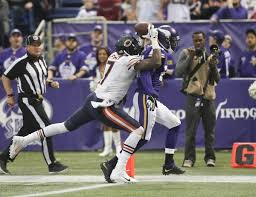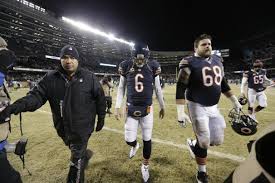
The Chicago Bears’ loss to the Green Bay Packers Sunday represented a microcosm of their season. Ranked second in scoring and yards per offensive play in 2013, the Bears were again betrayed by a defense that yielded the most yards per play in the league and the second most points. The players had not even exited Soldier Filed before attention turned to how the Bears could resurrect a woeful defense with the same efficiency with which they overhauled an offense ranked 28th in yards per play in 2012.
The Bears have seven selections in the 2014 draft that should largely be devoted to adding talent on defense. We are not huge proponents of using free agency to build the core of a team. We applaud Bears’ General Manager Phil Emery’s judicious use of multi-year free agency last season to fill two gaping holes on the squad when he signed left tackle Jermon Bushrod and tight end Martellus Bennett. Otherwise, he limited free agent acquisitions to one-year deals or inexpensive contracts.
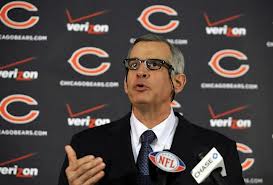
Our opposition to the overuse of free agency is that it could handcuff a team’s effort to maintain sufficient salary cap flexibility to extend the contracts of its homegrown talent. We have also noted previously, in paying homage to our neighbors to the North, the Green Bay Packers, that building a team of largely homegrown talent creates more continuity and less inertia among players in terms of practice habits and implementing offensive and defensive schemes.
So how do the Bears maximize their salary cap flexibility this offseason to achieve the dual goals of making a strategic splash in free agency; and signing several players on defense to one-year deals until Emery’s draftees are ready to replace the short term acquisitions?
The club currently has at least 25 players who are scheduled to become unrestricted free agents on March 1, 2014, many for whom the Bears will probably willingly pack their bags. The most notable is quarterback Jay Cutler, whom, as we previously wrote, we are opposed to retaining because of our confidence in head coach Marc Trestman to generate comparable or better performance from the position from much less expensive alternatives (e.g. Josh McCown).
Since the Bears have relatively few players signed to long term deals, they already have ample salary cap space. But the Bears can still create additional salary cap flexibility.
Under NFL salary cap rules, a team can prorate a player’s signing bonus and other guarantees over the life of his contract. However, when a player is released before he fulfills his contract, the portion of the guarantees that has been prorated for seasons of his contract that the player does not complete accelerate against the salary cap for that season’s or over two seasons’ caps depending on whether the player is released before or after June 1. This results in what is called “dead money” or allocations to the salary cap for a player whose contract is no longer active. While all teams absorb dead money, it is optimal to try to minimize it. However, there are instances when a player’s cap figure is so much greater than the dead money that would result from releasing him, it is more palatable to endure the dead money than to proceed with the contract.
In order create even more salary cap flexibility to achieve their dual goals of strategically using free agency to rebuild their defense and to extend the contracts of young core players, they can release seven players, identified below, currently under contract for next season whose performance does not merit their 2014 salary and/or merit remaining with the team.
1) Julius Peppers: Defensive Lineman Peppers, 34 in January and coming off his worst statistical season as a Bear in terms of sacks and solo tackles, has a 2014 cap figure of $18,183,000. If released, the dead money on the cap would be $8,366,688 for cap savings of $9,861,332.
2) Earl Bennett: Wide Receiver Bennett’s yard per catch dropped appreciably to a career-low of 7.6 in 2013. The emergence of Marquess Wilson and the interchangeable parts in Trestman’s offense make the slot receiver Bennett expendable. Bennett’s cap figure for 2014 is $2,450,000. If released, the dead money would be zero for cap savings of $2,450,000.
3) Michael Bush: Running Back Bush’s yards-per-carry have declined five consecutive seasons and were a paltry 3.1 in 2013. His cap figure for 2014 is $3,850,000. If released, the dead money against the cap would be $2,000,000, for cap savings of $1,850,000.
4) Eric Weems: Wide receiver Weems not only caught just one pass, but his special teams production tailed off considerably from previous seasons with the Bears and Atlanta Falcons. His cap figure for 2014 is $1,600,000. The dead money against the cap if released is $500,000, resulting in $1,100,000 in salary cap savings.
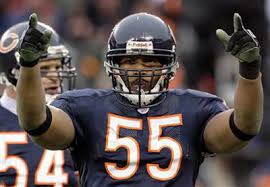
5) Lance Briggs: Linebacker Briggs, 34 next season, missed seven games due to injury but was not nearly as effective as the Bears had grown accustomed to both before and after the injury. Briggs’ cap figure for next season is $6,500,000. The dead money if Briggs is released is $1,000,000, resulting in $5,500,000 of salary cap savings.
6) Chris Conte: Strong Safety Conte had a dreadful season in both pass coverage and run support. His cap figure for 2014 is $1,564,400 while the dead money if he is released is $133,400. The potential cap savings is $1,431,000.
7) Adam Podlesh: Led by punter Podlesh, the Bears ranked 29th in the league in net punting average and just 13th in kicks downed inside the opposing team’s twenty yard-line. Podlesh’s cap figure for 2014 is $1,825,000, while the dead money if he released is $800,000. The potential cap savings is $1,025,000.
The total cap savings if these seven players are released would be $21,012,332.
The additional cap money opened up by releasing these in-contract veterans would go a long way toward giving Emery all of the assets he would need to achieve the goals of rebuilding the defense and maintaining salary cap flexibility to eventually extend the contracts of core members’ like wide receivers Alshon Jeffery and Brandon Marshall and offensive lineman Kyle Long and Jordan Mills.