

Whenever Lionel Messi comes to your town, it’s an event- a MAJOR event. The local Major League Soccer franchise that is hosting the match against Messi and Inter Miami CF then moves the game from their soccer specific venue to the nearby NFL stadium.
They have to, in order to meet the excess demand for tickets. Attendance for a match with Messi in it dwarfs the non-Messi matches by an insane multiple. But are these actually soccer fans who are coming to these games?

Or even Inter Miami fans for that matter?
Are they just Lionel Messi fans? He’s 38, so he’s not going to be playing too much longer.
While the Messi effect has been huge for the league, it hasn’t done anything at all to change the stereotype of MLS as a “retirement home” league.

With LAFC just having signed Son Heung-Min, 33, from Tottenham Hotspur, breaking the MLS transfer fee record in the process, this reputation is only reinforced.
Son is also on his last contract/team before he hangs up his cleats. Manchester United and England National Team legend Wes Brown gave a wide-ranging interview to RG.org, and during the session he was asked about how the Brits view MLS.
“I think it’s good,” Brown responded. “I think everyone likes it. Messi coming is a massive boost.

“I know a few older players that maybe talk about when they get a bit older, they would like to come. I think it’s always been in that sort of light.
“Really, it’s not like it’s a retirement home, but I think all clubs, as they go on through the years, get better and more experienced, and eventually, get the players you need, and you start producing the players as well.”
Brown, who toured the United States with his former club this summer, is right.

He immediately referenced Messi, and then brought up the “retirement home” narrative, albeit in a positive way. Brown then mentioned the greater, more forward-looking goals of building up the American top flight via player development.
Instead of just making the splash signings of big name, but also aging superstars.
Brown continued on with his positivity:

“I think most English people would think the MLS is a good League and when it’s on, we watch it like any other game. The fans love it, it’s a different atmosphere here. It’s more relaxed, you know, everyone can sit with everyone.”
That’s true, in MLS, fans of rival clubs can sit together. At the Hell is Real Derby, Columbus Crew supporters can peacefully coexist with FC Cincinnati fans. At least more so than at the Merseyside derby, or Manchester Derby, or North London Derby.

Brown, who won 13 trophies, including five Premier League titles and two UEFA Champions Leagues during his United tenure, gave this interview at a youth soccer clinic staged at the Chicago Fire FC pitch.
The clinic was held on a day that was literally 100+ degrees Fahrenheit; about 110-115 on the heat index scale, so it was a strange day for Brown to be asked about Chicago style pizza.
However, someone asked him what kind of pizza he liked better- New York or Chicago?
Brown said he prefers the thinner, wider NYC style.

“I had the Chicago one, and it’s too filling,” he responded. “I ordered a big full piece. It’s nice though.”
We then pointed out how you can really only have deep dish when it’s cold out. Eating it on a hot, humid day is very comfortable. “I agree with that,” said the man that Sir Alex Ferguson once called: “without question the best natural defender this club has had for years.”
Kudos to the person who asked him this question, thereby conforming to Chicago stereotypes.
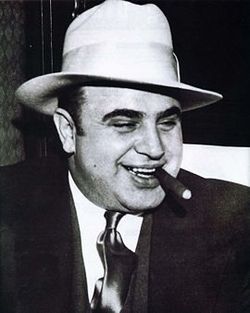
Maybe they could have followed up with a query on Al Capone and the Blues Brothers.
You may ask yourself, what does any of this pizza nonsense have to do with Messi or MLS?
Nothing; absolutely nothing.
But that is in fact the point- MLS is still searching for a true identity, beyond the retirement home reputation (as flawed as that narrative may be). You can make a case that the league over-expanded far too quickly and this was self-defeating for them.
It’s pretty much inarguable that their broadcast rights decision was boneheaded and maladaptive.
And thus, beyond Messi and Son, we just don’t know what will make/keep the league relevant.
Paul M. Banks is the Founding Editor of The Sports Bank. He’s also the author of “Transatlantic Passage: How the English Premier League Redefined Soccer in America,” and “No, I Can’t Get You Free Tickets: Lessons Learned From a Life in the Sports Media Industry.”
He currently contributes to USA Today’s NFL Wires Network. His past bylines include the New York Daily News, Sports Illustrated and the Chicago Tribune. His work has been featured in numerous outlets, including the Wall Street Journal, Forbes, the Washington Post and ESPN. You can follow him on Linked In and Twitter