
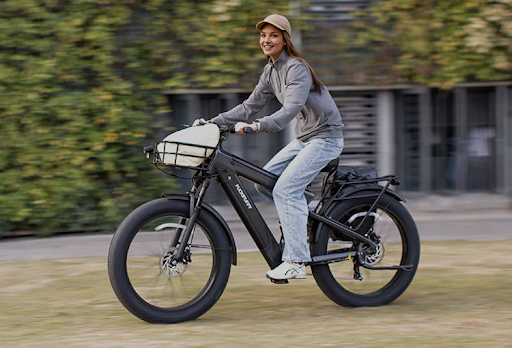
In a market full of bold claims—faster motors, longer range, bigger numbers—it’s easy to assume that better e-bikes are simply more extreme ones. More power, more speed, more capability.
But when it comes to commuter e-bikes designed for city riding, the priorities often look very different. Instead of pushing limits, many of these bikes are intentionally restrained. They focus on balance—between comfort and control, assistance and effort, performance and predictability.
That choice isn’t accidental. It’s a response to how city riding actually works.
Why Extremes Rarely Match Everyday City Riding
Urban riding is defined by variety, not intensity. A single commute can include smooth bike lanes, rough pavement, tight corners, traffic lights, pedestrians, and sudden stops—all within a few miles.
In that environment, extreme performance is rarely useful. Top speed matters less when you’re stopping every block. Maximum power feels unnecessary when control and smoothness are what keep the ride comfortable.
For most city riders, the goal isn’t to test limits. It’s to move through the city with as little friction as possible.
Balance Makes Riding Feel Predictable
One of the most valued qualities in a commuter e-bike is predictability. Riders want to know how the bike will respond before it responds.
Balanced bikes tend to deliver power gradually rather than aggressively. Steering feels steady rather than sharp. Braking feels controlled instead of abrupt. These characteristics reduce the mental effort required to ride in traffic or crowded areas.
When a bike behaves consistently, riders spend less time managing it—and more time focusing on where they’re going.
Why Comfort Isn’t About Softness
Comfort in city riding is often misunderstood. It’s not about plush suspension or oversized components. It’s about how the bike feels over repeated, everyday use.
A balanced commuter e-bike absorbs small imperfections in the road without feeling sluggish. The riding position feels natural rather than demanding. After multiple stops and starts, the bike still feels manageable.
This kind of comfort doesn’t come from excess. It comes from thoughtful proportions and restraint.
Control Matters More Than Capability
Many e-bikes are capable of far more than city riders ever ask of them. That capability isn’t inherently bad—but it can be unnecessary.
In daily commuting, control is more valuable than raw ability. Being able to start smoothly at a light, navigate narrow lanes, or slow down confidently in unpredictable situations matters more than peak output.
Balanced commuter e-bikes prioritize these moments. They’re designed around the most common scenarios, not the most extreme ones.
Why Weight and Geometry Play a Quiet Role
Balance also shows up in how a bike is built. Weight distribution, frame geometry, and component choice all influence how manageable a bike feels.
A well-balanced commuter e-bike doesn’t fight the rider. It feels easy to guide at low speed, stable when rolling, and calm when stopped. These qualities don’t grab attention in a showroom, but they define the riding experience over time.
In cities, subtle design decisions often matter more than dramatic ones.
The Appeal of Bikes That Don’t Demand Attention
Perhaps the strongest argument for balance is how it affects daily habits. Bikes built around extremes tend to demand attention—more adjustment, more awareness, more decision-making.
Balanced commuter e-bikes fade into the background. Riders don’t think about assist modes, performance thresholds, or whether the bike is “too much” for the trip. They just ride.
That ease encourages consistency. And consistency is what turns an e-bike into a true commuting tool rather than an occasional option.
Why “Enough” Is Often Better Than “More”
In city riding, “enough” is a powerful concept. Enough power to move smoothly. Enough range to cover daily trips. Enough comfort to ride regularly.
More than that often adds weight, complexity, or distraction without improving the experience. Balanced commuter e-bikes aim for sufficiency rather than spectacle.
This approach doesn’t diminish their usefulness—it enhances it by keeping the focus on everyday reality.
A Design Philosophy Shaped by Urban Life
Cities reward solutions that are adaptable, forgiving, and easy to repeat. Commuter e-bikes that embrace balance fit naturally into that rhythm.
They’re not built to impress on paper. They’re built to feel right on a random Tuesday morning, when the ride is just one part of a busy day.
That’s why balance, rather than extremes, continues to define what makes a good commuter e-bike.
Conclusion
Commuter e-bikes don’t avoid extremes because they lack ambition. They avoid them because city riding demands something different.
Balance creates confidence. Confidence creates ease. And ease is what makes people ride again tomorrow.
You can see this mindset reflected in city-focused e-bike brands such as Puckipuppy, where the emphasis is on calm handling, everyday comfort, and reliability rather than pushing headline specs. It’s a reminder that, in urban riding, the best designs are often the most restrained.