
By Jake McCormick
As a Green Bay Packer fan, I was happy to hear that head coach Mike McCarthy has threatened a fine of $1,701 if a player uses Twitter during game day. It clearly shows that he wants his players thinking about nothing but the task at hand; a mentality that I fully condone given the results of the 2008 season. I’d rather see Aaron Rodgers and Ryan Grant studying game photos after an interception, fumble, or touchdown than tweeting about it when the FOX camera pans the sidelines.
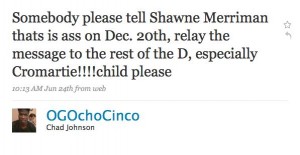
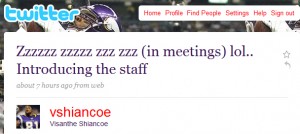
But other NFL teams haven’t been so quick to quarantine the Twitter virus before it spread around their locker rooms, as seen with San Diego Charger Antonio Cromartie’s training camp food problems and Minnesota Viking Visanthe Shiancoe’s boredom with meetings. Cromartie was fined $2,500 and Shiancoe explained that his “zzzzzzzzzzzz” tweet was during an administrative meeting, not team meeting. I don’t even have to explain Chad Ochocinco’s Twitter fetish and his quarrel with ESPN analyst Mark Schlereth, as it seems to be the “Jon and Kate” story of the NFL.
 It’s easy to argue that athlete tweets during games can give fans a chance to feel more “in the moment” after a touchdown or big play and allow them some view into the athlete’s mindset at that time. I’ll also say that in-game Twitter use will force reporters covering the team to ask more difficult questions than “what were you thinking during that one-handed catch on fourth down?” and will add more to post-game stories and storylines throughout the week.
Unlike the fan site-like Facebook and MySpace, Twitter allows celebrity-athletes to show the public a small peak into their daily lives in 140 characters or less. The problem is that word limits can create ambiguity, as seen in the case of Shiancoe, and speaking/acting in the moment isn’t always the best idea. See: Prince Fielder vs. the Los Angeles Dodgers and any stupid decision you’ve ever made when it was a better idea to cool off and collect yourself. I’ve been there way too much, trust me.
But since there is already an NFL-wide issue with Twitter use, and we haven’t even started the regular season, what other problems will in-game tweets create and how will it affect a team’s chemistry? Considering the NFL already has rules similar to airplanes during takeoff, as any sort of electronic device is prohibited by players and coaches from when they arrive at the stadium to the end of the game, it will be awfully hard for an ego-maniac like Ochocinco to follow through on his promise.
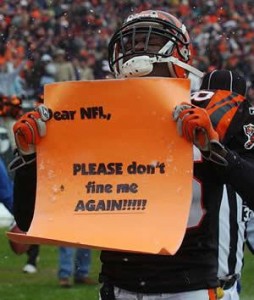 The NFL has already started a process to update those policies to include social media networks, which should effectively make in-game Twitter use a non-issue by Week 1. Feel free to take notes on prevention instead of reaction, Major League Baseball. I wouldn’t be surprised to see Ochocinco or Terrell Owens happily paying the fine for more publicity and followers. Unfortunately, the good ol’ U.S. of A. loves their People magazines, “reality” television, and the Days of Favre’s Lives. I’ll admit that I’ve been a sucker for conflict, and the bottom line is that it works better than any sales pitch out there.
Tweeting on the sidelines might seem interesting at first, but it’s a controversy because of its disruptive and often selfish nature. The last thing an NFL team needs is for its best players to voice their concerns to the public without sending them through a coach first. Fans want to feel confident that there is no “i” in team, and Twitter use in-game will do more harm than good to that cliché.