
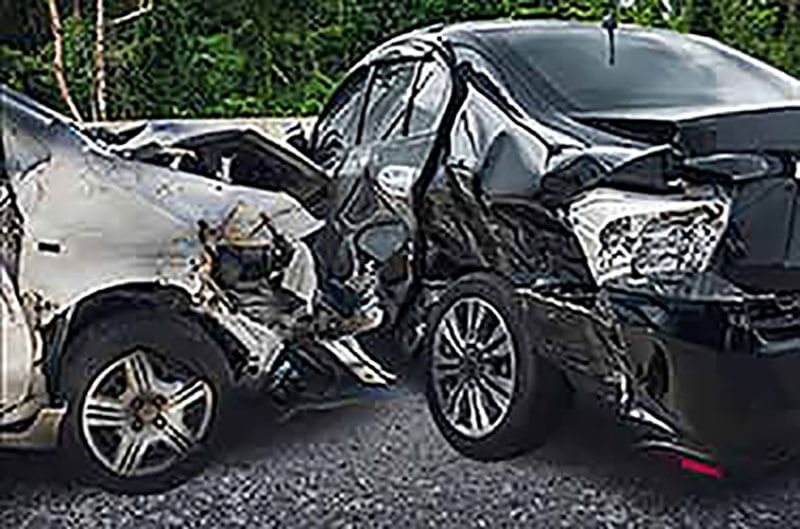
Being involved in a car accident is always a stressful experience, whether you were the car accident victim or the driver who was at-fault. One serious concern that often arises afterward, more than one Toronto personal injury lawyer agrees, is how long the car accident, truck accident, motorcycle accident or other vehicle accident will remain on your driving record.In Ontario, like in many other jurisdictions, accidents remain on your driving record for a certain period of time. In this article, we will explore the duration for which a car accident stays on your record in Ontario and the potential consequences of this on your a) insurance rates, (also called insurance premiums), and b) your general insurability.
Length of Time an Accident Stays on Your Driving Record
In Ontario, car accidents typically remain on your driving record for three years from the date of the accident. This means that the accident will be visible to insurance companies and law enforcement agencies during that time. However, it is important to note that the duration may vary depending on the severity of the accident and any resulting convictions or penalties.
A driver’s abstract is a record of your driving history for the past three years. It is one of many driving record types you can get through the Ontario Ministry of Transportation (MTO). When referring to a driver’s abstract, most people mean the three-year uncertified driver’s record.
Criminal Charges and Your Driving Record
When the police lay a charge following a motor vehicle accident, it likely that the charge will be one of three possible: 1) dangerous driving, 2) criminal negligence, or 3) careless driving.
Dangerous driving charges may be laid against a driver for any of the following:
- dangerous driving (weaving in and out of traffic at a high rate of speed, or following the car in front of you too closely);
- stunt driving (racing another car or motorcycle at 2 a.m. on a major highway);
- failure to obey road signs or traffic signals
- drinking and driving (or while under the influence of marijuana or Oxycontin, for example);
- driving causing death of the other driver or passengers; and
- failure to remain at the scene of an accident (hit-and-run)
Criminal negligence is also an offence under the Criminal Code of Canada. Under section 219 (1), an individual is criminally negligent who, a) in doing anything, or b) in omitting to do anything that it is his/her duty to do, shows reckless disregard for the lives or safety of other people.
The offences of careless driving and careless driving causing bodily harm are not criminal offenses, but rather offenses under the Highway Traffic Act. These charges are levied when a driver drives without reasonable care or attention to other drivers, or causes bodily harm or death to another driver, passengers, or pedestrians.
Penalties for Dangerous Driving, Careless Driving
The minimum penalty for a driver convicted of dangerous driving that causes bodily harm, is: for a first offence, a fine of $1,000; for a second offence, imprisonment for a term of 30 days; and for each subsequent offence, imprisonment for a term of 120 days. Under section 320.24 (4) of the Criminal Code, if a driver is convicted of dangerous driving, the Court may also order a licence suspension.
If convicted on indictment for dangerous driving, the driver could face imprisonment of up to 10 years; or, if convicted on summary conviction, the maximum jail time is up to two years. If someone is convicted of dangerous driving causing death, the minimum penalties are the same as for dangerous driving causing bodily harm, but the maximum jail term is for life.
Upon conviction, the penalties for careless driving, and careless driving causing bodily harm or death, can include fines of between $400 and $2,000 or imprisonment of up-to six months, or both; licence suspension of up to two years; and demerit points on your Ontario driver’s licence.
Effects of Your Driving Record on Insurance Premiums
One of the main worries for drivers involved in an accident is the potential impact on their insurance premiums. When you apply for a new auto insurance policy, or renew your existing policy, insurance companies review your driving record to assess their risk against your a) driving skill, b) driving experience, including past accidents where you were at-fault, or you were convicted of a criminal driving charge, and c) the degree to which a driver indulges in risky driving behaviour.
Generally, these are the “red flags” for insurance companies that signal a poor, or risky, driver:
- A repeated history of losing demerit points on your driver’s licence
- Fines for moving violations, such as failing to stop at a stop sign or red light
- Speeding tickets
- Careless driving charges
- Dangerous driving charges
If you have an accident on your record, especially if you were at-fault, it typically results in an increase in your insurance premiums. Further, if you have been convicted of dangerous driving, the Court orders a licence suspension. you will effectively be uninsurable. In other words, you will not be able to obtain insurance because you are not licenced to drive at all.
Some insurance companies in Ontario have an “accident forgiveness” clause, [called a “rider” in the insurance policy itself. For accident forgiveness clause means that insurance companies can’t increase a driver’s premium after a minor at-fault collision that causes less than $2,000 in damage and no injuries if there was no claim payout. This applies to accidents that occurred in June 2016 or later. This provision is limited to one minor accident every three years, according to the Financial Services Regulatory Authority (FSRA), Ontario’s car insurance regulator.
However, insurance providers may have different policies regarding the specific impact of accidents on premiums, so it’s best to consult with your insurer to understand their policy.
Why a Clean Driving Record is Critical for Car Insurance
Maintaining a clean driving record is your best bet in a number of ways, says an experienced car accident lawyer. By avoiding accidents and traffic violations, you demonstrate responsible driving behavior and reduce the risk of insurance premium increases.
As well, a clean driving record is paramount when applying for certain jobs that require driving, as employers often consider your driving history during the hiring process. This is true for long-haul truckers, short-haul truckers, couriers, and taxi drivers.
How Fault Determination Rules Affect Your Driving Record
In Ontario, fault determination plays a crucial role in how accidents are recorded and their impact on your driving record.
The province follows a “no-fault” insurance system, meaning that each party involved in an accident is responsible for reporting the incident to their respective insurance companies, regardless of who is at fault. Many people still find this confusing, says a car accident injury lawyer at Verkhovets Law.
When an automobile accident lawyer launches a lawsuit to claim your damages, a key component to be established is fault under the Insurance Act and Fault Determination Rules.
Ontario has a “no-fault” car insurance system, but this does not mean that no one is at fault in a motor vehicle accident. The Fault Rules say which driver was responsible for an accident. Accidents are either 0%, 25%, 50%, 75%, or 100% at fault. The fault determination rules in Ontario can be complex, and it is important to understand them to ensure accurate reporting and resolution of any potential claims.
5 Ways to Improve Your Driving Record
While accidents do remain on your driving record for three years in Ontario, here are five tips from some of the best Toronto car accident lawyers to improve your driving record:
- Leave Earlier for All Appointments and Meetings: It is simply not worth it to try to gain 2 or 12 minutes by driving aggressively and risk getting into an accident.
- Remind Yourself That the Effects of Many Car Accidents Cannot be Reversed. You cannot turn back the clock on a serious car accident that left someone in a wheelchair, a quadriplegic, or dead.
- Practice Defensive Driving: Practice safe and defensive driving techniques to reduce the likelihood of accidents and traffic violations. Do not be provoked by aggressive drivers or those with road-rage. Wish them well instead.
- Report and Resolve Claims: Promptly report any accidents to your insurance company, ensuring that the incident is accurately documented and resolved.
- Take Driver Education Courses: Some insurance providers offer discounts for drivers who complete approved driver education courses. These courses can also help improve your driving skills and reduce the likelihood of future accidents. This is particularly important for young and relatively new drivers.
In Ontario, car accidents typically stay on your driving record for three years from the date of the incident. It is important to understand the potential impact on insurance premiums and take steps to maintain a clean driving record.
By practicing safe driving habits, promptly reporting accidents, and staying informed about the fault determination rules, you can mitigate the impact of accidents on your driving record and ensure a safer driving experience, every personal injury lawyer agrees.
Remember to consult with your insurance provider for specific details and guidelines regarding accidents on your driving record.