
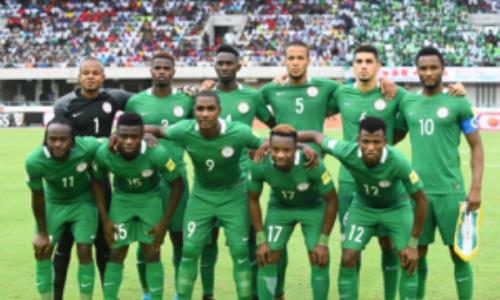
Across Europe’s biggest leagues this season, one trend keeps repeating itself — Nigerian players are not just present, they are decisive. From title races in Italy to high-intensity battles in England and Germany, this group of players is shaping outcomes in ways that go beyond simple statistics. It’s not just about goals or assists anymore; it’s about influence.
For those following weekly performances and tactical breakdowns, platforms focused on nigeria football news provide a closer look at how these players are evolving across different leagues.
The attacking edge that sets Nigeria apart
At the heart of this wave is Victor Osimhen, a striker who has developed into one of the most complete forwards in Europe. What separates him from others is not just his finishing, but his movement — constantly stretching defenses, forcing mistakes, and creating space for teammates. In big matches, he doesn’t disappear; he becomes more visible.
Ademola Lookman brings a different kind of threat. His game is built on unpredictability — quick changes of direction, sharp decisions in tight areas, and the ability to turn half-chances into real danger. He doesn’t need many touches to influence a match, and that efficiency has made him one of the most effective attackers in Italy.
In Germany, Victor Boniface has emerged as a forward who blends physical strength with technical awareness. He isn’t just finishing moves — he’s involved in building them. That ability to connect midfield and attack has made him central to his team’s structure.
Elsewhere, Terem Moffi continues to prove that consistency still matters at the highest level. He may not dominate headlines every week, but over the course of a season, his contribution becomes impossible to ignore. And then there’s Paul Onuachu, whose aerial presence offers something completely different in a game that often prioritizes speed over physical dominance.
Control, balance, and intelligence in midfield
While the forwards attract attention, much of Nigeria’s influence in Europe is built from deeper areas. Alex Iwobi is a perfect example of that evolution. No longer just a wide player, he now operates as a connector — linking defense and attack, carrying the ball forward, and setting the tempo in midfield.
Alongside this shift, players such as Raphael Onyedika are quietly establishing themselves. His role is less visible but just as important: winning possession, maintaining structure, and ensuring transitions happen smoothly. These are the details that define high-level football, and he’s mastering them early.
Wilfred Ndidi remains the reference point in this area. Even when team performances fluctuate, his consistency rarely does. His positioning and reading of the game allow others around him to play with more freedom, which is often underestimated but essential.
The defensive foundation completing the picture
No team dominates without stability at the back, and Nigerian players are contributing there as well. Ola Aina’s versatility makes him particularly valuable — he adapts to different systems, whether as a full-back or in a more compact defensive setup. That flexibility is increasingly important in modern football.
Behind the defense, Maduka Okoye is still developing, but the signs are clear. Playing regularly at a high level is refining his decision-making, especially in moments where composure matters more than reflexes. His progress reflects a broader trend: Nigerian players are not just arriving in Europe — they are growing within it.
A generation that is changing perceptions
What makes this moment different is the collective impact. In previous years, standout individuals carried the spotlight. Now, it’s an entire group influencing multiple leagues at the same time. Clubs are no longer looking at Nigerian players as long-term projects — they are seen as immediate solutions.
This shift is important. It changes recruitment patterns, expectations, and ultimately the role Nigerian football plays on the global stage. And if the current trajectory continues, this generation won’t just be remembered for its talent, but for redefining what Nigerian players represent in European football.