

By Jake McCormick
The Milwaukee Bucks’ loss to the Detroit Pistons last night falls in the same category as the Green Bay Packers loss to the Tampa Bay Buccaneers, the Wisconsin Badger basketball team’s loss to UW-Green Bay, and the sweep of the Milwaukee Brewers at the hands of the Pittsburgh Pirates. The one difference between these four is that the Bucks’ loss, which was uglier than the Elephant Man or one of those 300 pound Wal Mart shoppers in rascals, was at the friendly confines of the Bradley Center.
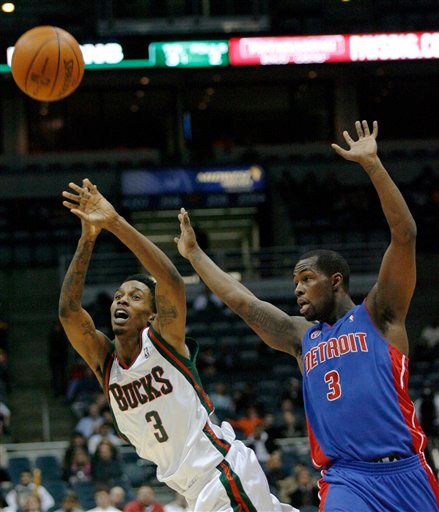 Like getting robbed by an old lady in a motorized cart, we didn’t see it coming. Milwaukee was 7-0 at home since the beginning of 2010. The Pistons had all the makings of a pushover, much like a forearm tattoo of a flaming skull screams trashy Caucasian and a Chinese symbol on an Irishman’s tricep signifies his impending Tool Academy appearance.
Still, anyone who weathered the storm to watch the Bucks suffer their worst home loss of the year was duped into expecting a victory on a Scott Skiles-driven chariot with Andrew Bogut and Brandon Jennings leading the pack of noble stallions around the arena. It really was like the surprise at the end of No Country for Old Men when Llewellyn doesn’t save his fair maiden from armed drug dealers after telling them off and forcefully hanging up the phone for the last time. When you come to expect a certain formula and result from something, it’ll typically remind you that reality can be stranger, and much more impactful, than fiction.
So sitting on press row last night, with thoughts of Jonas Jerebko’s resemblance to Ivan Drago, dreams of the Bucks shooting better than 16% in a quarter, and visions of airballed threes from Carlos Delfino and Jerry Stackhouse that are staples of the pre-game grade school exhibition matchup, the reality of Milwaukee’s recent upswing set in like a sedative.
The Bucks typically shoot with similar accuracy to villains in James Bond or Arnold Schwarzenegger movies, so no win is ever guaranteed when they shoot below 45% and score nine points in a quarter. Losing to a team as downtrodden as Detroit could have an upside along the lines of the bounce back each team experienced after hitting rock bottom.
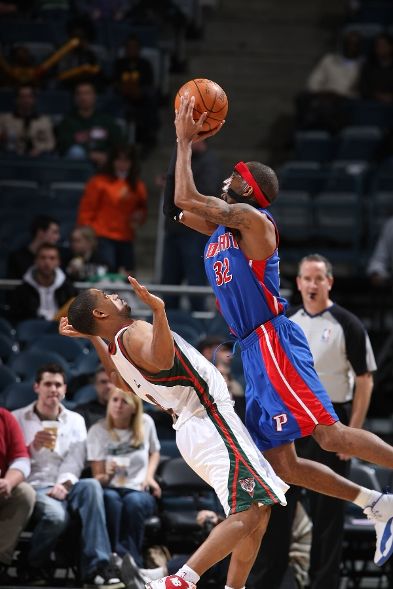 Now the Bucks know how low they can get, and even a friendly environment can’t prevent an embarrassing loss. After the game, Skiles and Bogut were quick to treat the game as any other home defeat, and Bogut pointed out the fact that with 300+ quarters in an NBA season, there will always be a lowest low and a highest high. They still have a chance to end the first half with a win tonight in New Jersey, and the All-Star Break should give Milwaukee some time to relax, regroup, and remember what got them to a 11-9 post-New Years record.
Just like Skiles has discussed the need for a signature road win to build confidence, a signature home loss can be just as effective in reminding the team what can happen when the foundation collapses. It can drive a team’s hunger for a win even more, in order to prove that the misfire was more exception than rule. I’ve used this Batman analogy a million times over, but that’s because it applies to a million situations:
Why do we fall? So we can pick ourselves up.