
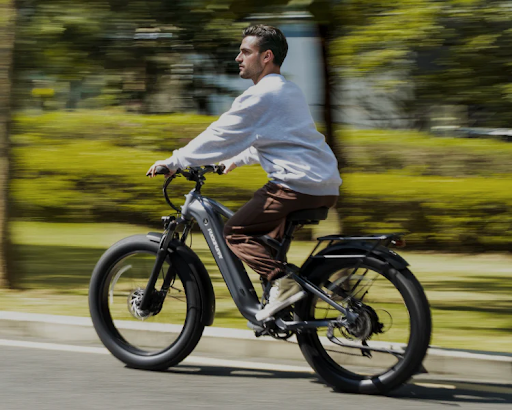
One of the most common questions people ask when considering an electric bike for commuting is simple: How far can a commuter e-bike actually go in a day? Range is often one of the first specifications riders look at, but the real answer depends on more than just the battery size listed in a product description.
In reality, the daily range of a commuter e-bike is influenced by a combination of factors, including battery capacity, terrain, riding style, assistance levels, and the type of riding a commuter does each day. Understanding how these elements interact can help riders develop a realistic picture of what an e-bike can achieve during everyday use.
Understanding Typical E-Bike Range
Most commuter e-bikes today offer a range somewhere between 30 and 70 miles on a single charge. However, that number represents a broad estimate rather than a fixed distance.
Manufacturers usually calculate maximum range under ideal conditions, which might include:
- Flat terrain
- Moderate rider weight
- Lower levels of motor assistance
- Steady riding speeds
- Favorable weather conditions
In real-world commuting situations, riders often experience slightly different results. Even so, the typical range of a commuter e-bike is usually more than enough for most daily travel patterns.
Daily Commuting Distances Are Often Shorter Than Expected
One reason commuter e-bikes work well for daily transportation is that most urban trips are relatively short. Studies of urban mobility show that many city commutes fall within a range of 3 to 10 miles each way.
Even riders with longer routes often travel fewer than 20 miles per day in total.
This means that a commuter e-bike with a 40–60 mile range can comfortably cover several days of riding before needing to be recharged. For many commuters, charging the battery every two or three days—or even once a week—can be sufficient.
Because of this, the practical range of a commuter e-bike often exceeds what most riders actually need.
Battery Capacity and How It Affects Range
Battery capacity plays a major role in determining how far an e-bike can travel. Capacity is typically measured in watt-hours (Wh), which indicates how much energy the battery can store.
Common commuter e-bike batteries range from about 400Wh to 700Wh.
A larger battery generally provides greater range, but it also adds weight and cost. For city commuters, the goal is usually to find a balance between enough battery capacity for daily rides and a bike that remains lightweight and easy to handle.
In many cases, a mid-sized battery provides the best combination of practicality and range.
Riding Style Can Change the Distance
How a rider uses the motor assistance also affects how far an e-bike can travel. Most e-bikes offer several assistance levels that control how much help the motor provides while pedaling.
Higher assistance levels deliver more power and make riding easier, but they also consume battery energy more quickly. Lower assistance levels conserve energy and allow riders to extend their range.
For example:
- Eco mode may provide the longest range
- Normal or tour mode balances assistance and efficiency
- High or sport mode uses more power but reduces range
Many commuters adjust assistance levels throughout a ride depending on terrain and energy use.
Terrain and Elevation Matter
Terrain is another important factor affecting e-bike range. Riding on flat city streets typically requires less motor assistance than climbing hills or navigating steep inclines.
Cities with significant elevation changes may reduce overall range because the motor needs to work harder during climbs. However, downhill sections and flat areas can help balance energy use during a ride.
For commuters in relatively flat cities, range estimates tend to be closer to the maximum values provided by manufacturers.
Weather Conditions and Range
Weather can also influence how far an e-bike travels on a single charge. Strong headwinds, cold temperatures, and wet conditions can slightly reduce battery efficiency.
Cold weather in particular can affect lithium-ion batteries, temporarily reducing their capacity during rides in winter conditions. Fortunately, most riders can compensate for this by charging their battery more frequently or using slightly lower assistance levels.
For most urban commuting situations, weather effects are noticeable but manageable.
Weight and Cargo Considerations
The total weight carried by the e-bike also affects range. Rider weight, cargo, and accessories all influence how much energy the motor must use during a ride.
Commuters who carry backpacks, work bags, or groceries may see a small reduction in range compared with riding without additional weight. However, commuter e-bikes are generally designed to handle these loads efficiently.
Many city e-bikes include rear racks or cargo options that make carrying items easier while maintaining good balance.
Realistic Daily Riding Scenarios
To better understand what a commuter e-bike can accomplish in a day, it helps to consider a few typical scenarios.
A rider commuting 8 miles each way to work travels roughly 16 miles per day. With a 50-mile range e-bike, that rider could complete three full days of commuting before needing to recharge.
Another commuter traveling 12 miles each way might ride around 24 miles per day. Even in this case, a single charge would usually be enough for two days of commuting.
For riders who only use their e-bike for short errands or occasional trips, charging may only be required once or twice per week.
These examples illustrate how commuter e-bike range generally exceeds the needs of everyday urban travel.
Designing E-Bikes for Daily Range Needs
Because of these typical travel patterns, many manufacturers design commuter e-bikes specifically around practical daily range rather than maximum distance.
Instead of building extremely large batteries, companies often focus on efficient motor systems, balanced weight, and batteries sized for everyday commuting.
This approach keeps bikes manageable while still offering plenty of range for typical urban routines.
Charging Habits for Commuters
Charging an e-bike battery is generally straightforward. Most riders simply plug the battery into a standard household outlet after returning home. Charging times vary depending on battery size and charger speed but usually take between three and six hours.
Some commuters prefer to charge overnight so their bike is ready each morning. Others charge only when necessary, which may be every few days depending on travel distance.
Because charging is simple and relatively quick, range limitations rarely become a major inconvenience for everyday commuters.
Conclusion
So how far can a commuter e-bike really go in a day? In practical terms, the answer is much farther than most riders actually need. With typical ranges between 30 and 70 miles, modern commuter e-bikes easily cover the distances required for daily urban travel.
While factors such as terrain, riding style, and weather can influence range, most riders find that a single charge comfortably supports several days of commuting.
For city residents looking for a reliable and efficient way to travel, commuter e-bikes provide a balance of range, convenience, and practicality that fits naturally into everyday life. As urban transportation continues to evolve, their role in daily commuting is likely to grow even further.
How Far Can a Commuter E-Bike Really Go in a Day?
One of the most common questions people ask when considering an electric bike for commuting is simple: How far can a commuter e-bike actually go in a day? Range is often one of the first specifications riders look at, but the real answer depends on more than just the battery size listed in a product description.
In reality, the daily range of a commuter e-bike is influenced by a combination of factors, including battery capacity, terrain, riding style, assistance levels, and the type of riding a commuter does each day. Understanding how these elements interact can help riders develop a realistic picture of what an e-bike can achieve during everyday use.
Understanding Typical E-Bike Range
Most commuter e-bikes today offer a range somewhere between 30 and 70 miles on a single charge. However, that number represents a broad estimate rather than a fixed distance.
Manufacturers usually calculate maximum range under ideal conditions, which might include:
- Flat terrain
- Moderate rider weight
- Lower levels of motor assistance
- Steady riding speeds
- Favorable weather conditions
In real-world commuting situations, riders often experience slightly different results. Even so, the typical range of a commuter e-bike is usually more than enough for most daily travel patterns.
Daily Commuting Distances Are Often Shorter Than Expected
One reason commuter e-bikes work well for daily transportation is that most urban trips are relatively short. Studies of urban mobility show that many city commutes fall within a range of 3 to 10 miles each way.
Even riders with longer routes often travel fewer than 20 miles per day in total.
This means that a commuter e-bike with a 40–60 mile range can comfortably cover several days of riding before needing to be recharged. For many commuters, charging the battery every two or three days—or even once a week—can be sufficient.
Because of this, the practical range of a commuter e-bike often exceeds what most riders actually need.
Battery Capacity and How It Affects Range
Battery capacity plays a major role in determining how far an e-bike can travel. Capacity is typically measured in watt-hours (Wh), which indicates how much energy the battery can store.
Common commuter e-bike batteries range from about 400Wh to 700Wh.
A larger battery generally provides greater range, but it also adds weight and cost. For city commuters, the goal is usually to find a balance between enough battery capacity for daily rides and a bike that remains lightweight and easy to handle.
In many cases, a mid-sized battery provides the best combination of practicality and range.
Riding Style Can Change the Distance
How a rider uses the motor assistance also affects how far an e-bike can travel. Most e-bikes offer several assistance levels that control how much help the motor provides while pedaling.
Higher assistance levels deliver more power and make riding easier, but they also consume battery energy more quickly. Lower assistance levels conserve energy and allow riders to extend their range.
For example:
- Eco mode may provide the longest range
- Normal or tour mode balances assistance and efficiency
- High or sport mode uses more power but reduces range
Many commuters adjust assistance levels throughout a ride depending on terrain and energy use.
Terrain and Elevation Matter
Terrain is another important factor affecting e-bike range. Riding on flat city streets typically requires less motor assistance than climbing hills or navigating steep inclines.
Cities with significant elevation changes may reduce overall range because the motor needs to work harder during climbs. However, downhill sections and flat areas can help balance energy use during a ride.
For commuters in relatively flat cities, range estimates tend to be closer to the maximum values provided by manufacturers.
Weather Conditions and Range
Weather can also influence how far an e-bike travels on a single charge. Strong headwinds, cold temperatures, and wet conditions can slightly reduce battery efficiency.
Cold weather in particular can affect lithium-ion batteries, temporarily reducing their capacity during rides in winter conditions. Fortunately, most riders can compensate for this by charging their battery more frequently or using slightly lower assistance levels.
For most urban commuting situations, weather effects are noticeable but manageable.
Weight and Cargo Considerations
The total weight carried by the e-bike also affects range. Rider weight, cargo, and accessories all influence how much energy the motor must use during a ride.
Commuters who carry backpacks, work bags, or groceries may see a small reduction in range compared with riding without additional weight. However, commuter e-bikes are generally designed to handle these loads efficiently.
Many city e-bikes include rear racks or cargo options that make carrying items easier while maintaining good balance.
Realistic Daily Riding Scenarios
To better understand what a commuter e-bike can accomplish in a day, it helps to consider a few typical scenarios.
A rider commuting 8 miles each way to work travels roughly 16 miles per day. With a 50-mile range e-bike, that rider could complete three full days of commuting before needing to recharge.
Another commuter traveling 12 miles each way might ride around 24 miles per day. Even in this case, a single charge would usually be enough for two days of commuting.
For riders who only use their e-bike for short errands or occasional trips, charging may only be required once or twice per week.
These examples illustrate how commuter e-bike range generally exceeds the needs of everyday urban travel.
Designing E-Bikes for Daily Range Needs
Because of these typical travel patterns, many manufacturers design commuter e-bikes specifically around practical daily range rather than maximum distance.
Instead of building extremely large batteries, companies often focus on efficient motor systems, balanced weight, and batteries sized for everyday commuting.
Brands working in the commuter segment, including Puckipuppy, reflect this design philosophy by emphasizing real-world usability and reliable daily travel distances rather than chasing extreme range figures.
This approach keeps bikes manageable while still offering plenty of range for typical urban routines.
Charging Habits for Commuters
Charging an e-bike battery is generally straightforward. Most riders simply plug the battery into a standard household outlet after returning home. Charging times vary depending on battery size and charger speed but usually take between three and six hours.
Some commuters prefer to charge overnight so their bike is ready each morning. Others charge only when necessary, which may be every few days depending on travel distance.
Because charging is simple and relatively quick, range limitations rarely become a major inconvenience for everyday commuters.
Conclusion
So how far can a commuter e-bike really go in a day? In practical terms, the answer is much farther than most riders actually need. With typical ranges between 30 and 70 miles, modern commuter e-bikes easily cover the distances required for daily urban travel.
While factors such as terrain, riding style, and weather can influence range, most riders find that a single charge comfortably supports several days of commuting.
For city residents looking for a reliable and efficient way to travel, commuter e-bikes provide a balance of range, convenience, and practicality that fits naturally into everyday life. As urban transportation continues to evolve, their role in daily commuting is likely to grow even further.