

The Rose Bowl seems to be the only college football entity unapologetically trying to stick to tradition these days, while the rest of the sport sells out to corporate interests. Obviously, this is not an absolute truth, 100%, but in general this is the way that the wind is currently blowing.
However, more traditions are at immediate risk of being lost.
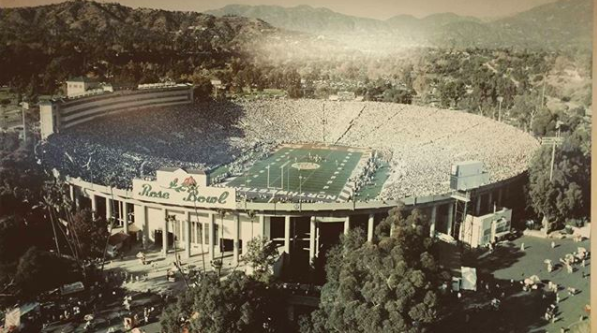
The death of the Pac-12 ended any hope of trying to ressurrect the tradition of hosting/staging Big 10-Pac 10 matchups.
Of course, that already started to go away with the College Football Playoff, but the Rose Bowl did its best to preserve whatever traditions they can, within this format.
Now the stadium’s main tenant, the UCLA Bruins football program, is trying to breach their contract (their lease agreement stipulates that they play their home games at the iconic venue until 2043) and move to SoFi Stadium next season.
So you know what’s next- would the actual Rose Bowl game itself also get up and move to SoFi?
After all, the Cotton Bowl game long left the Cotton Bowl Stadium and the Orange Bowl game left the Orange Bowl Stadium while it was still standing.
There are no sacred cows in college football that won’t be slaughtered these days.
And that’s too bad, because I’m old enough to remember when UCLA was ranked the nation’s “#1 jock school,” back in the late 1990s.
They should have a football team that plays their home games in a legendary venue. And there is no setting, in all of college football, quite like the Rose Bowl.
Kirk Herbstreit described it best, over at this link.
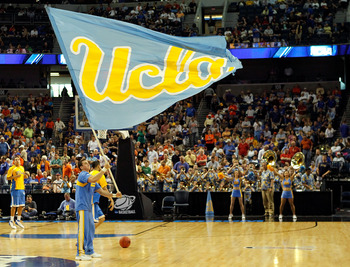
Not to mention that UCLA basketball, on the men’s side, is the most accomplished, by far, in the history of the sport. On the women’s side, head coach Cori Close is really doing great things, and really has the program moving in the right direction right now.
While UCLA might be moving on from the Rose Bowl, we don’t want to do the same.
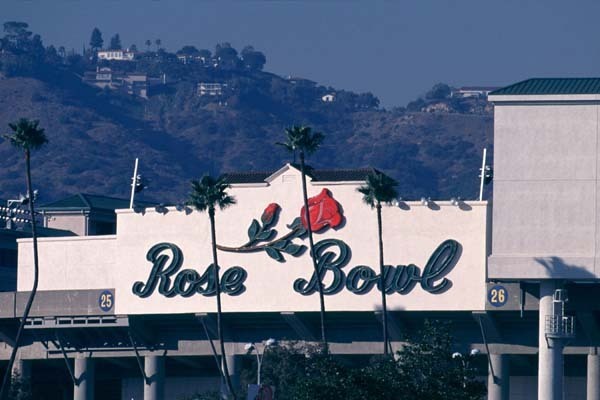
We’d like to keep it relevant as much and as long as possible. In addition to the Rose Bowl game and CFP contests, we suggest this- move the Big Ten title game there.
Yes, have the Big Ten title game leave Indianapolis, and be staged in Pasadena every year.
And with that, go back to two separate divisions in the Big Ten.

We divided them up this way:
Division A
Illinois, Iowa, Indiana, Michigan, Minnesota, Northwestern, Ohio State, Purdue, Wisconsin
Division B
USC, UCLA, Washington, Oregon, Maryland, Rutgers, Nebraska, Penn State, Michigan State
Yes, the divisions would be “New School” and “Old School,” but feel free to come up with much names than that. Obviously not “Legends ” and “Leaders,” because that was terrible. The dividing line is chronological.
In other words, ee divvied them up in order of when they joined the conference.
Yes, Division A does not have the awful travel concerns and issues that Division B does, but hey, it has already been long decided that travel concerns aren’t taken into account anymore.

They have been deemed not to really matter these days. You have California playing Florida State in conference games now.
Also, names of conferences don’t matter anymore either- you have Northern Illinois in the Mountain West, Stanford in the Atlantic Coast Conference, and many, many more.
There are numerous examples we could mention.
However, this new Big Ten realignment could lend itself to setting up your classic, traditional Pac-10 versus traditional Big 10 match-ups in these Rose Bowl conference title games. And even when that doesn’t happen, you would still sometimes likely get a traditional Big Ten versus a team from another part of the country, so it’s an intersectional title game, which would be more compelling.
And that would be great for the Rose Bowl.
And what’s great for the Rose Bowl would be fantastic for college football.
Paul M. Banks is the Founding Editor of The Sports Bank. He’s also the author of “Transatlantic Passage: How the English Premier League Redefined Soccer in America,” and “No, I Can’t Get You Free Tickets: Lessons Learned From a Life in the Sports Media Industry.”
He currently contributes to USA Today’s NFL Wires Network, RG.org and Ratings.org. His past bylines include the New York Daily News, Sports Illustrated and the Chicago Tribune. His work has been featured in numerous outlets, including the Wall Street Journal, Forbes and the Washington Post.