
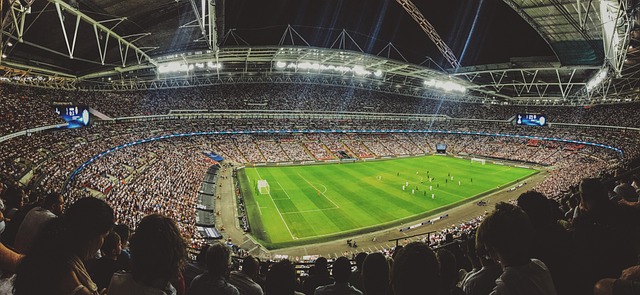
If you walked into a Premier League stadium or an NFL arena ten years ago, the “fan experience” was relatively static. You bought your ticket, you sat in your plastic seat, you bought a lukewarm pie, and you watched the game. The connectivity was usually terrible, the screens were pixelated, and the only data you had was the scoreboard.
Fast forward to 2026, and the landscape has shifted seismically. We are currently witnessing the maturation of the “Smart Stadium” – a venue that is not just a concrete bowl for watching sport, but a living, breathing data ecosystem designed to extract maximum value from every second of the event.
For franchise owners and league commissioners, the focus has moved beyond simple ticket sales. The new battleground is “attention retention.” In an era where fans can watch a 4K stream from the comfort of their living room with cheaper beer and better replay angles, stadiums are having to evolve to offer something the sofa cannot.
The Infrastructure of Immersion
The foundation of this revolution is connectivity. The aggressive rollout of Wi-Fi 7 and private 5G networks within major venues like the Tottenham Hotspur Stadium and SoFi Stadium has finally solved the “bandwidth bottleneck.”
In 2026, fans expect to be “dual-screening” the entire match. They want to watch the striker make a run on the pitch while simultaneously watching the replay on their phone, checking the xG (Expected Goals) stats, and messaging their friends in a group chat. Stadiums that cannot support this level of data throughput are rapidly becoming obsolete.
This infrastructure is also powering the rise of Augmented Reality (AR) in the stands. We are seeing the rollout of apps that allow fans to point their phone at the pitch and see live player stats hovering over their heads. It is a gamification of the live experience that appeals directly to the Gen Z and Gen Alpha demographic, who have grown up expecting a digital overlay on their physical reality.
The Integration of Real-Time Betting
Perhaps the most significant commercial driver of this data revolution is the seamless integration of the gambling industry into the matchday fabric. We have moved far beyond the days of a dodgy betting kiosk in the concourse.
Today, the modern sports franchise operates much like a high-end casino floor. The goal is to keep the user engaged, entertained, and participating in the “action” for as long as possible. Just as a casino uses lights, sounds, and rapid game cycles to maintain immersion, smart stadiums use data to keep fans engaged with the betting markets.
With “micro-betting” – the ability to wager on specific, short-term outcomes like the next corner, the next throw-in, or the speed of the next serve – the volume of data required is immense. This is where the low latency of the new 5G networks becomes critical. You cannot offer a market on the “next pitch” if the video feed is delayed by five seconds.
This integration has turned the stadium into a live trading floor. Fans are no longer just passive observers; they are active participants in the economy of the game. Whereas casinos and casino games with official licenses from sports teams and bodies were relatively common ten years ago, sister site comparison specialists have noted that this trend is disappearing in favour of the more direct, in-stadium approach. While this raises valid questions about responsible gambling safeguards – which leagues are now strictly enforcing – from a business perspective, it has opened up a revenue stream that dwarfs traditional merchandise sales.
Biometrics and the Cashless Concourse
The friction of the matchday experience is also being eroded by biometrics. The “just walk out” technology, pioneered by Amazon in retail, is now standard in many top-tier sports venues.
Facial recognition ticketing is slowly replacing the QR code, which replaced the paper ticket. You walk up to the turnstile, the camera recognises you, and you are in. The same applies to buying a halftime drink. Soon, you’ll pick up a pint and walk out; the cameras track the item and charge your account automatically.
This is not just about convenience for the fan; it is about “throughput” for the venue. Every second a fan spends queuing is a second they aren’t watching the game or spending money. By removing the friction of payment, venues have seen per-head spending increase by upwards of 30% in the last two years.
The “At-Home” Stadium Experience
Interestingly, this technology is not just for the 60,000 people in the stands. It is also being used to bridge the gap for the millions watching at home.
The “Digital Twin” concept – creating a virtual replica of the stadium in the cloud – allows broadcasters to offer virtual tickets. A fan in Tokyo can buy a “seat” at a match in Manchester. Through a VR headset, they can view the game from that specific seat’s perspective, look around the stadium, and even interact with the virtual avatars of other fans.
This unlocks “infinite capacity.” A stadium is no longer limited by its physical architecture. It can sell the same seat ten thousand times over to virtual attendees. For global brands like Manchester United or the Dallas Cowboys, this is the holy grail of revenue expansion.
Sustainability as a Service
Finally, the smart stadium is a green stadium. The integration of IoT (Internet of Things) sensors allows venue managers to control energy usage with granular precision. Lights in empty corridors turn off automatically; water usage is monitored for leaks in real-time; and crowd heat is often recaptured to power the heating systems.
In 2026, sustainability is no longer a PR box-ticking exercise; it is a core operational metric. With energy prices remaining volatile, the efficiency gains from a smart management system can save a venue millions of pounds a year.
The Future: The Stadium as a Content Studio
Looking ahead, the trend is clear. The stadium is evolving from a venue into a content studio. Every angle is filmed, every metric is tracked, and every moment is packaged for immediate consumption.
For the sports business professional, the lesson is simple: the game is no longer just about what happens on the grass. It is about the data flowing through the air, the efficiency of the queue, and the depth of the digital immersion. The “Smart Stadium” is here, and it is changing the rules of the game forever.