
While my grandma was still alive, she often told our family the story of her passing by the St. Valentine’s Day Massacre aftermath. It was the morning of February 14th, 1929. Bessie Hoffman (later becoming Banks), was 23 years old at the time, and on the Clark Street bus (route 22), heading towards her job at the Palmer House when the vehicle rode past the scene of the grisly crime (2122 N. Clark St.) just a couple hours after it transpired.
Every time she told the story she would mention that the gangster era of Chicago was very overblown and hypersensationalized.
At least in regards to the level of danger to the average citizen. She would always say that they really didn’t bother anybody who wasn’t a rival gang, and only fought amongst themselves.
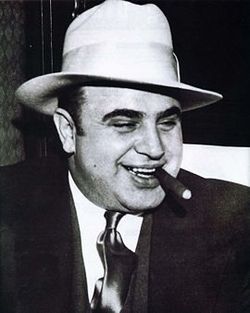
Her re-telling of the times when Al Capone ruled this town mirror the conflicted, complicated and often contradictory legacy that he left behind, not just in Chicago, but around the entire world.
As we’re only three years shy of the centennial of what is arguably the city’s most infamous episode, the opportunity to revisit the current state of the St. Valentine’s Day Massacre site presents itself.
The best of what’s previously been written on this topic comes from Alex Bean of Chicago Detours.
He points out how the vicious killing of five members of the North Side Gang, along with two of their associates or affiliates, changed the public perception of Capone forever:
Up to that time Capone had been a popular gangster–one could say even a celebrity. He courted publicity and openly allied his gang with the corrupt administration of Mayor William Hale Thompson. Many Chicagoans considered him a modern day Robin Hood. Yet this crime was so savage, bloody, and brazen that the public, newspapers, and law enforcement all turned on Capone. The press declared him “Public Enemy #1? in 1930.
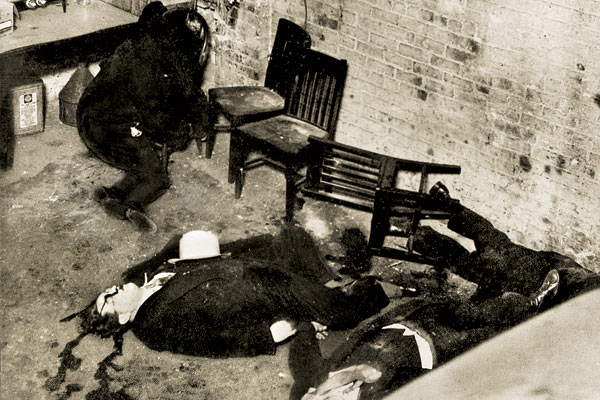
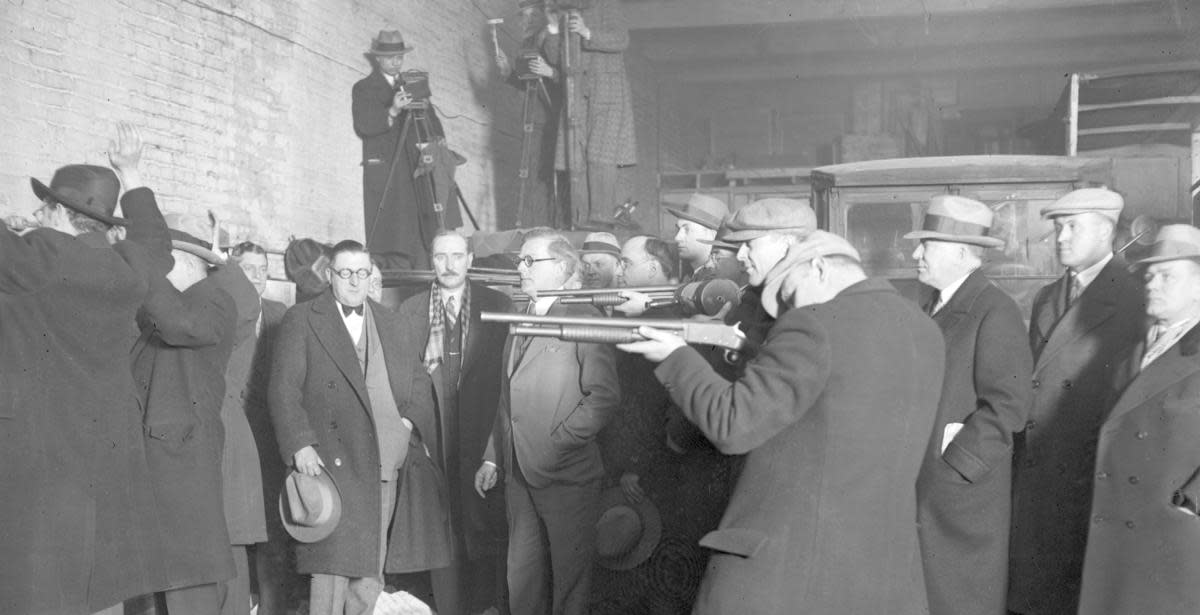
The seven men, including a Linksman and the top lieutenant of North Side gang leader Bugs Moran, were placed up against the back wall of the SMC Cartage company and savagely slaughtered by four members of their South Side rivals, known as the Chicago Outfit.
Two of the men were dressed as Chicago Police officers, and while the crime is officially unsolved- everyone involved knew back then who ordered this hit- Mr. Alphonse Capone who happened to be in Miami at the time.
The intended target was Moran himself, but just like Daffy Duck, Capone was never able to get one over on Bugs. Moran slept-in that day, escaped death, and lived until 1957, when he passed away at age 63 in Leavenworth Federal Penitentiary.
The SMC Cartage company building was demolished in 1967, after at least one business failed to set up shop in the garage.
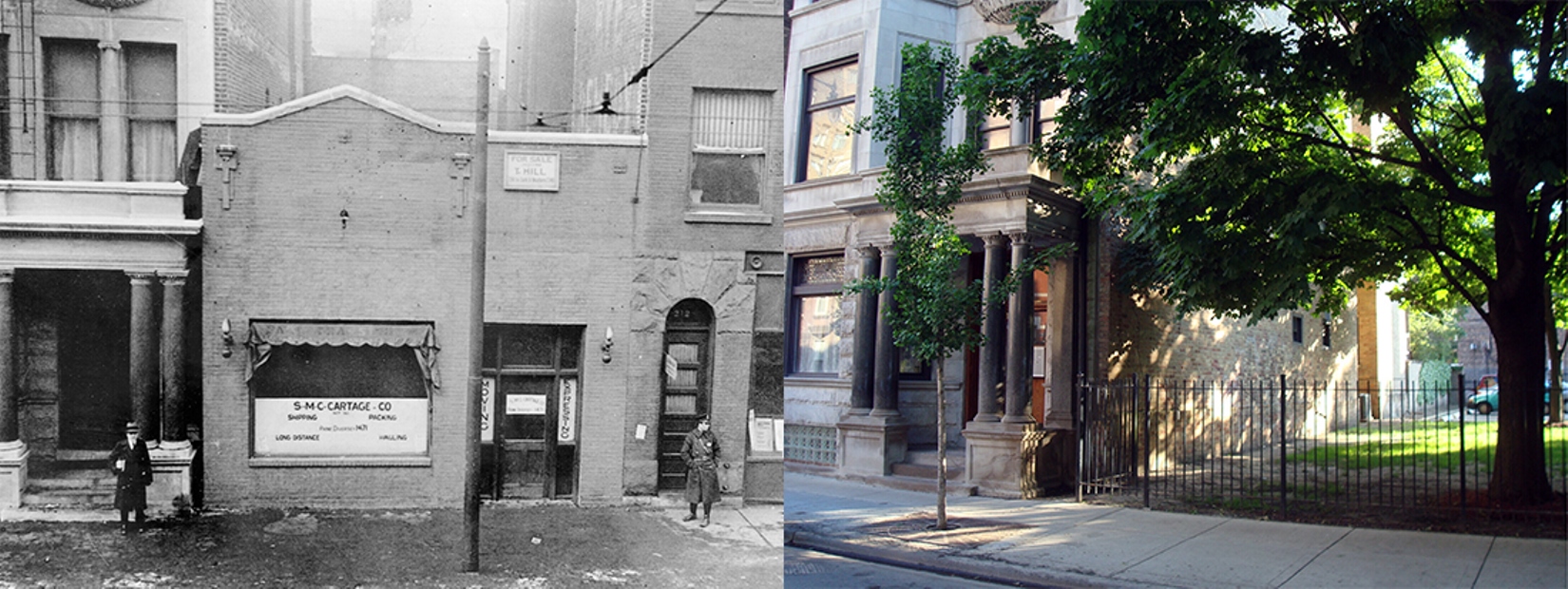
Any business that attempted to set up shop there was destined to fail, because as Bean put it:
“the crime passed from news into mythic legend as soon as it happened” and: “the garage itself became a tourist attraction almost immediately after the initial shock wore off.”
Today, the site is completely, utterly nothing. It looks as mundane and banal as any landscape could:
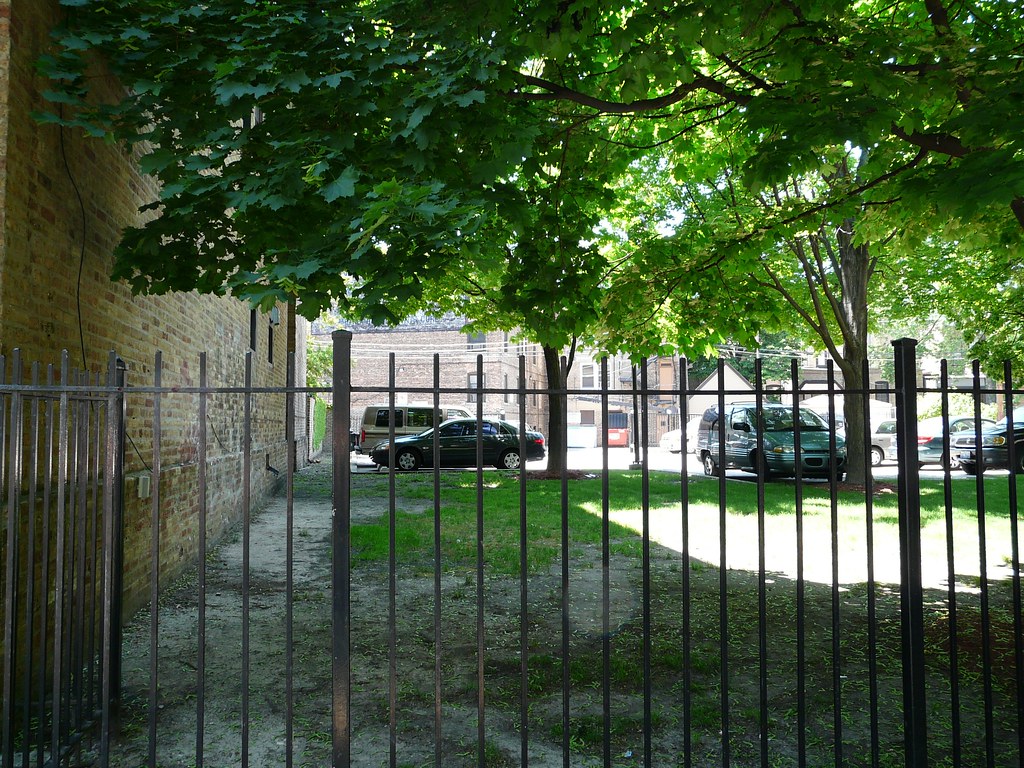
It’s a very small lawn and parking lot for the Margaret Day Blake Apartments, and its visual says to the passer by “nothing at all, of any consequence ever occurred here.”
Which is probably exactly what the city wants, and I get why, but at the same time it is still very strange, to say the least.
Across the way you’ll find the Chicago Pizza and Oven Grinder in the bottom floor of a Victorian brownstone, which was used as a lookout by two Capone thugs. They stalked the Moran gang for days ahead of the massacre, trying to calculate when the opportune time to carry out the hit would be.
This building is all that physically remains from the St. Valentine’s Day massacre in Chicago today.
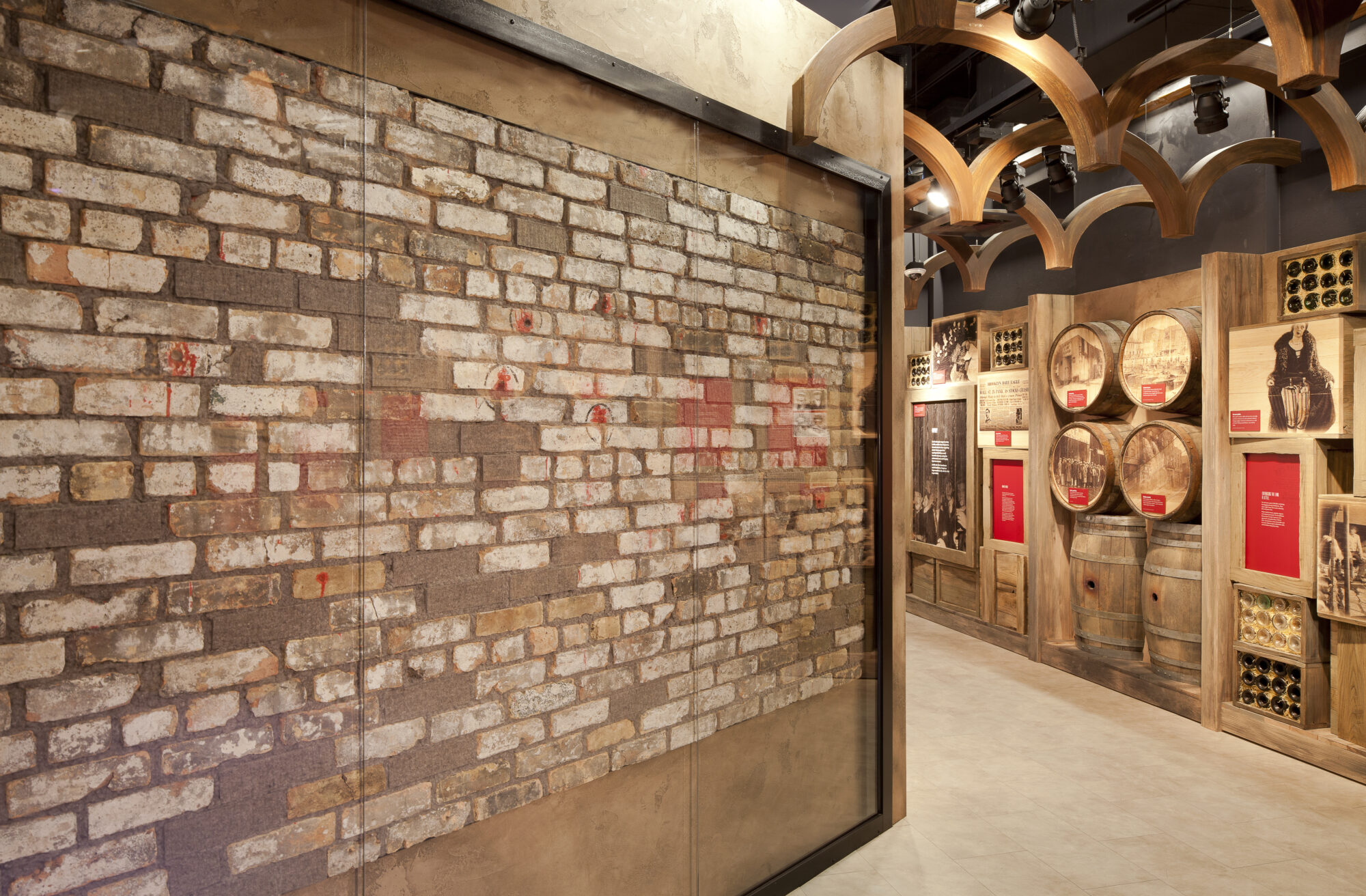
The bricks from the bloody wall now reside on the third floor of the Mob Museum in Las Vegas, but they before moving to their current destination in the desert, they once had another very colorful home.
Bean points out how Canadian businessman George Patey once:
put the bricks in a Roaring Twenties-themed nightclub, the Banjo Palace, in downtown Vancouver. Highlights of the club included Canada’s largest circular barbecue and wax figures of gun-toting mobsters.
The piece de resistance was, of course, the reassembled wall from the site of the St. Valentine’s Massacre in the men’s bathroom. Gentlemen could aim at urinal targets on the plexiglass-covered wall.
Bean wrote in his piece that he finds the city’s total erasure of the St. Valentine’s Day massacre to be rather odd and I strongly agree with him.
I also concur with this sentence from the final paragraph of his piece: “Capone was an amoral thug, no doubt, but he’s also an iconic part of the city’s history.”
As badly as Kanye West may try, if you had to pick one individual who is most synonymous with the city of Chicago, it’s either Al Capone or the Wilmington, North Carolina born Michael Jordan.
The truth is America, culturally, is just essentially a girl with a really severe bad boy complex. Crime pays if you’re making movies, television shows, rap albums, novels etc.
American cultural consumers just can’t enough of this stuff; violent and morally depraved the content may be. If it weren’t for Al Capone and the St. Valentine’s Day massacre, would we even have:
mafia movies, gangsta rap or Scarface (both the MC and the film)?
Capone is symbolic of a by-gone era of speak-easies, tommy-guns and tin lizzies; forever romanticized by Roaring 20s/Flappers and Gangsters theme parties.
While Capone was a deplorable low-life who committed countless repugnant atrocities, there are still numerous souvenir stores in the city peddling shot glasses, coffee mugs, post cards, keychains and most aptly flasks, bearing his likeness.
Obviously, the manufacturers and vendors of these items have no moral qualms about making money off the Capone “legacy.”
It’s an ugly, uncomfortable truth to realize, but it is the truth, nonetheless. A general idiot who was a genius at crime, at least until they got him on tax evasion, Capone is a proverbial rock star today.
“When I sell liquor, it’s bootlegging. When my patrons serve it on a silver tray on Lakeshore Drive, it’s hospitality,” he once said.
He may not have been an intellectual, but he evidently understood his conflicted image/legacy in real time.
In 2016, the most powerful super-agent in the world’s most popular sport bought the Miami mansion where Capone supposedly was at the time of the St. Valentine’s Day Massacre, for $9 million.
By no means am I suggesting a museum or a sculpture or anything of that nature be erected at the St. Valentine’s Day Massacre site, but this was Capone’s “biggest hit” off any murderous criminal “album” that he produced.
The site at 2122 N. Clark still deserves some kind of historical marker and/or plaque. Even the world’s 16th ever White Castle restaurant, which you can find on the south side near McCormick Place, has a historical marker.
Paul M. Banks is the Founding Editor of The Sports Bank. He’s also the author of “Transatlantic Passage: How the English Premier League Redefined Soccer in America,” and “No, I Can’t Get You Free Tickets: Lessons Learned From a Life in the Sports Media Industry.”
He currently contributes to USA Today’s NFL Wires Network, RG.org and Ratings.org. His past bylines include the New York Daily News, Sports Illustrated and the Chicago Tribune. His work has been featured in numerous outlets, including the Wall Street Journal, Forbes and the Washington Post.