
In This Article
This article contains:
- How Infrared Saunas Support Home Recovery
- Why Traditional Saunas Still Matter for Athletes
- What to Consider in Sauna Selection
- Methodology to Choose the Best Home Sauna
- Top 3 Companies for Home Infrared Sauna Recovery
- Frequently Asked Questions
You follow the highs and lows of the Premier League and track every performance from the Illinois Fighting Illini, so you already know recovery can shape results. What players do off the pitch or court often matters as much as what happens during the game.
That same idea applies to your own training and weekly matches. Heat therapy has become a popular recovery tool among athletes at every level, but choosing between infrared and traditional saunas can be challenging. The right option depends on how you train, recover and manage your energy week to week.
How Infrared Saunas Support Home Recovery
Infrared saunas offer a practical recovery option at home. They heat your body directly at temperatures ranging from 40° Celsius to 60° Celsius, making sessions more comfortable and promoting effective sweating without the heavy fatigue. Post-exercise heat can reduce muscle soreness, and infrared therapy can enhance recovery after explosive movements, such as jumping. The lower cardiovascular strain also helps you recover without affecting your next session.
Infrared heat may boost circulation, supporting nutrient delivery and waste removal after exercise, with some evidence pointing to muscle repair benefits. Importantly, it hasn’t shown negative effects on next-day performance. For home use, this combination of recovery and minimal fatigue makes infrared saunas easy to incorporate into your routine regularly. The heat helps relieve pain associated with arthritis, fibromyalgia and muscle soreness by boosting circulation and decreasing inflammation.
Why Traditional Saunas Still Matter for Athletes
If you train regularly, whether it’s weekend matches or high-intensity sessions, traditional saunas can still support your routine. They heat the air to 70° Celsius to 100° Celsius, creating intense conditions that promote heavy sweating. They are also often used for short-term weight reduction in certain sports. Many athletes use them for recovery, rehabilitation and heat acclimation, which may support endurance over time.
In addition to recovery and heat adaptation, regular sauna use can support cardiovascular health and overall fitness. Combining sauna sessions with your training routine can help relax blood vessels, promote circulation and support heart health, much like moderate exercise does. This makes saunas a useful complement to regular workouts, whether you’re playing football or basketball or doing high-intensity training. Even a few sessions per week can contribute to overall wellness and help maintain energy for your next match or training session.
What to Consider in Sauna Selection
Both options can support your recovery, but they work in different ways. Infrared saunas may suit you if you want a lower-heat, more comfortable session that you can use consistently without adding extra fatigue. Traditional saunas can be useful when you’re aiming for heat acclimation or short, more intense sweat sessions.
If you train frequently, you might find infrared easier to integrate into your weekly routine. If you prefer occasional, high-heat exposure, a traditional sauna can still play a role. In many cases, the best choice comes down to how your body responds and how easily you can maintain the habit at home.
Methodology to Choose the Best Home Sauna
- Heat type: Choose between infrared for lower temperatures and direct heat and traditional for higher temperatures and ambient heat, based on comfort and recovery needs.
- Recovery benefits: Look for features that support circulation, muscle relaxation and post-exercise recovery.
- Build quality: Prioritize durable materials, reliable construction and safety standards for long-term home use.
- Technology: Consider added features like full-spectrum infrared, low EMF design or light therapy for a more complete experience.
- Space and usability: Match the sauna size, setup requirements, and ease of use with your home and daily routine.
Top 3 Companies for Home Infrared Sauna Recovery
If you want a reliable sauna setup that fits into your training and daily routine, these brands stand out for quality, technology and ease of use.
1. Sunlighten

Sunlighten offers full-spectrum infrared saunas that heat the body directly for comfortable, effective wellness sessions. It has pioneered infrared technology since 1999, holding over 30 patents for its SoloCarbon® heaters. Saunas operate at lower air temperatures while penetrating deeply for circulation, muscle relaxation and detoxification. The mPulse® Smart Sauna combines near-, mid- and far-infrared with optional red light therapy for a customizable experience.
Trusted by wellness experts worldwide, Sunlighten emphasizes low-EMF safety and high-quality materials. Its saunas help people feel better, recover faster and maintain energy for daily life. Innovation and evidence-backed design guide every product. Sunlighten makes infrared therapy accessible for long-term health and vitality.
2. Clearlight

Clearlight focuses on integrating infrared sauna use into your daily routine, backed by decades of development since 1997. Its saunas use full-spectrum and far-infrared heat to warm your body directly, supporting circulation and post-exercise recovery. This approach helps deliver oxygen and nutrients to muscles, playing a key role in your body’s repair after training.
The brand emphasizes benefits like temporary relief from muscle soreness and faster recovery after intense sessions, with use supporting more efficient muscle repair and reduced fatigue. Its proprietary heater technology delivers consistent infrared output while maintaining low electromagnetic exposure.
3. Jacuzzi®
https://www.jacuzzi.com/en-us/
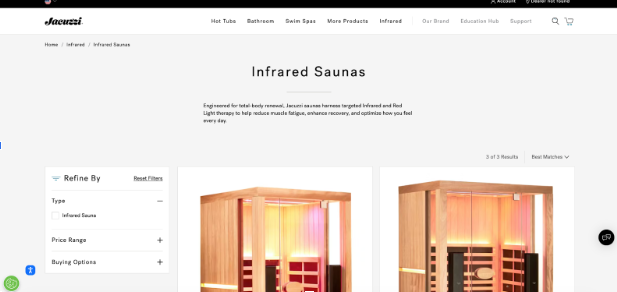
Jacuzzi® brings decades of wellness experience into infrared saunas, building on over 70 years in hydrotherapy. Its saunas use full-spectrum technology with near-, mid-, and far-infrared wavelengths to heat your body directly and support recovery. This approach helps relax muscles, reduce post-exercise tension and promote overall comfort after training.
Multiple heater types provide consistent, full-body coverage, making sessions more balanced and comfortable. The brand also offers features such as red light therapy and chromotherapy lighting to enhance relaxation. Jacuzzi saunas are designed for frequent, long-term use.
Frequently Asked Questions
Here are some common questions you may have regarding the best home sauna for you.
Is an infrared sauna better than a traditional sauna for recovery?
It can be, especially if you want lower heat and a more comfortable session that supports recovery without adding extra fatigue. Many athletes find it easier to use consistently after training.
Can a traditional sauna still benefit athletes?
A traditional sauna can support relaxation, heat acclimation and short-term weight management. You just need to time sessions carefully to avoid feeling drained before your next workout.
How often should you use a sauna for recovery?
Most people benefit from a few sessions per week, depending on training intensity. It helps to start gradually and adjust as your body responds.
Do saunas improve athletic performance directly?
They don’t work directly, but they can support recovery, which helps you train more consistently. Over time, better recovery can contribute to improved performance.
Choose the Right Sauna for Your Recovery Routine
Choosing the right sauna is influenced by your training, recovery and weekly energy management. Infrared saunas provide a gentler, more controlled heat that encourages regular use. On the other hand, traditional saunas offer a more intense experience that can align with specific fitness goals.
When utilized at appropriate times and frequencies, both types can aid in recovery. Ultimately, the best option is the one that integrates seamlessly into your routine and prepares you for your next workout.