
Most riders don’t start with this question on paper. It usually comes from experience. A weekday commute begins to feel routine, and at the same time, the urge to explore beyond paved roads starts to grow. That is when the idea takes shape: instead of choosing between two completely different bikes, is it possible to rely on one that can handle both worlds without compromise?
The answer is not as simple as yes or no. It depends on how those two types of riding actually differ, and whether one machine can realistically bridge that gap.
Two Different Riding Needs
Commuting and off-road riding are built around entirely different expectations. Daily riding tends to prioritize ease. Riders want smooth acceleration, predictable handling, and a level of comfort that allows them to move through traffic without thinking too much about the bike itself. The goal is efficiency and consistency, not intensity.
Off-road riding shifts that focus. The surface is no longer reliable, and the rider has to deal with uneven ground, loose gravel, sudden elevation changes, and constantly changing traction. In this environment, the bike needs to deliver strength and responsiveness. It must react quickly and maintain momentum where a standard commuter setup would struggle. These differences are fundamental, not cosmetic, which is why most bikes are clearly built for one purpose or the other.
Why Most Bikes Can’t Balance Both
Because the demands are so different, most designs lean heavily in one direction. A bike optimized for commuting often feels stable and forgiving, but once it leaves smooth pavement, its limitations become obvious. It may lack the power or structure needed to handle unpredictable terrain, forcing the rider to slow down or avoid certain paths altogether.
On the other side, a bike designed for off-road performance can feel out of place in everyday use. It may respond too aggressively at lower speeds or require more attention than a commuter would expect. The ride can feel less relaxed, even if the bike is technically more capable. This contrast is what leads many riders to assume that one bike cannot realistically serve both roles.
What Changes with a Fast Electric Dirt Bike
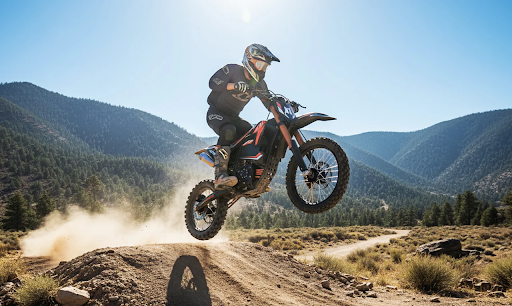
The balance begins to shift when speed and control are combined differently. A fastest electric dirt bike introduces a type of responsiveness that is not only immediate but also easier to manage. The power is available without delay, yet it does not have to feel abrupt or overwhelming.
This is where electric systems start to change expectations. Instead of building power gradually or requiring constant adjustment, the response becomes more direct and consistent. Riders can access performance when needed, while still maintaining a sense of control in slower, more confined environments. This does not eliminate the differences between commuting and off-road riding, but it reduces the friction between them.
Making One Bike Work in Both Conditions
For a single bike to function effectively in both scenarios, it has to do more than just deliver power. It needs to adapt its behavior based on how it is being used. In a commuting environment, that means the bike should feel stable, predictable, and easy to manage. It should allow the rider to move smoothly through traffic without introducing unnecessary tension.
When the same bike is taken off-road, the expectation changes. It must provide enough force to handle uneven surfaces, maintain traction, and keep moving forward even when conditions become less forgiving. The key is not switching between two different machines, but allowing one platform to behave differently under different conditions. A well-designed electric dirt bike can achieve this by making the transition feel natural, so the rider does not need to constantly adjust their approach.
Where This Setup Actually Makes Sense
Even when a bike is capable of handling both scenarios, it is important to understand where this approach works best. The idea is not to replace highly specialized machines, but to cover a wide range of real-world use.
For commuting, this setup works particularly well for short to medium distances, mixed routes, and riders who value flexibility over strict efficiency. On the off-road side, it is best suited for trails, dirt paths, and varied terrain that require adaptability rather than extreme performance. This is where the balance becomes most practical, allowing riders to move between environments without feeling limited.
Some newer approaches in the market, including those explored by Qronge, reflect this shift toward versatility. The focus is less on pushing a single performance metric and more on making the bike usable across different situations without losing its identity.
A More Practical Way to Ride
What ultimately makes this combination appealing is not just that it works, but how it changes the overall experience of riding. Instead of thinking in terms of separate use cases, riders begin to see their routes as continuous. A paved road can lead into a dirt path without requiring a different mindset or a different machine.
This continuity reduces friction, both physically and mentally. There is less need to plan around limitations or to choose between different types of rides. The bike becomes something that supports a wider range of movement, rather than something that defines where you can and cannot go.
In that sense, using a fast electric dirt bike for both commuting and off-road riding is not about forcing one machine to do everything. It is about finding a balance where performance and usability meet in a way that feels natural, making everyday riding more flexible and more connected.