
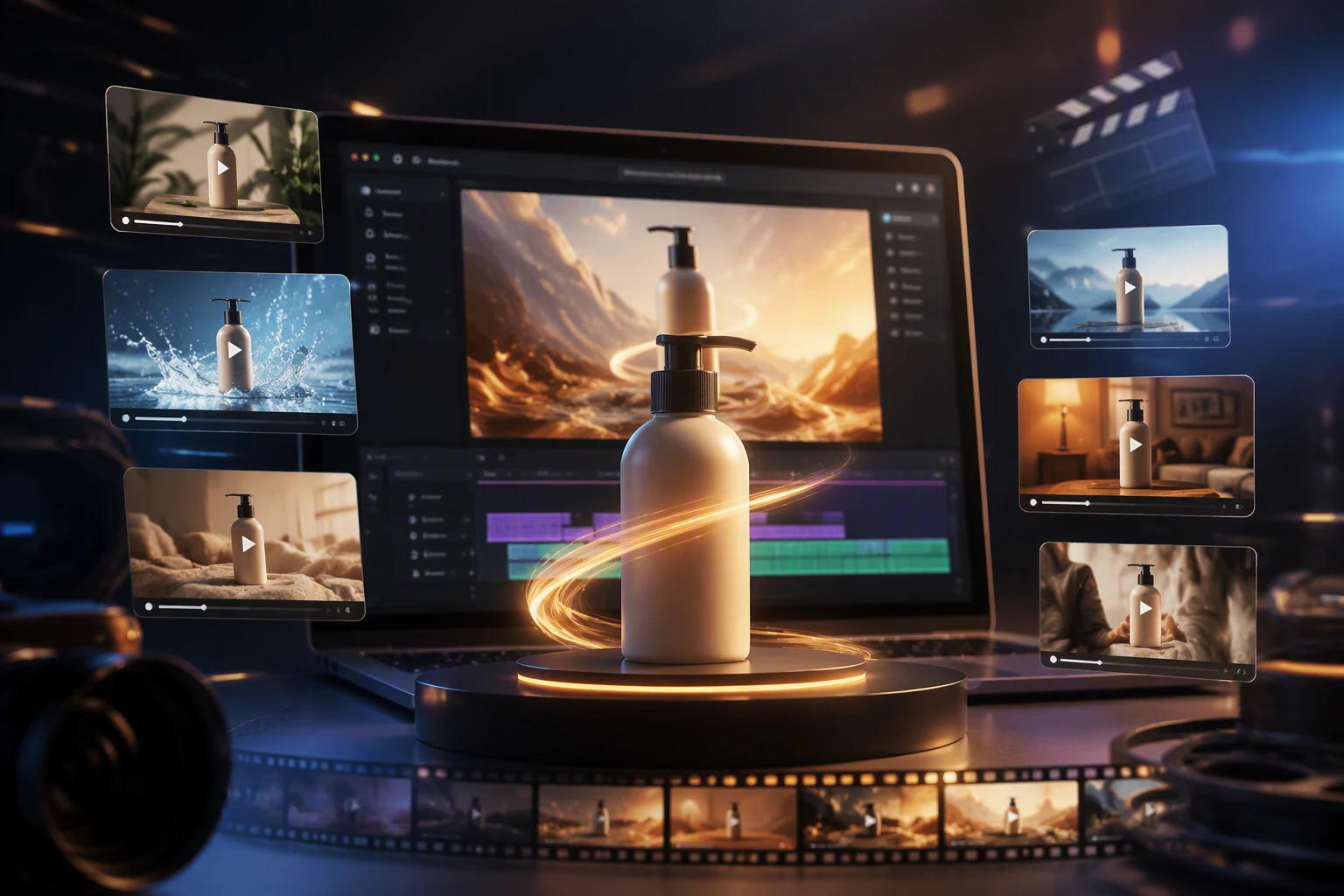
Video production often feels like a full time job that never ends. You spend hours planning, more hours filming, and then days sitting in front of editing software. This slow process makes it hard to keep up with the demand for fresh content on social media or for your business. Many creators feel burnt out because they cannot produce high quality videos fast enough to stay relevant.
AI tools are changing how we think about making movies and clips. You can now create videos without complicated production by using software that handles the heavy lifting for you. This means you do not need a massive studio or a team of experts to get your message across. You can focus on your story while the technology handles the technical details.
The ability to generate visual content from your ideas is a major advantage for anyone working in marketing or education. You no longer have to wait for a graphic designer to finish a project or for a camera crew to be available. You simply input your concept and let the AI build the foundation of your video. This shift allows you to move from an idea to a finished product in a fraction of the time it used to take.
Use Case 1: Social Media Content for Small Brands
Small business owners often struggle to post every day on platforms like Instagram or TikTok. They have to run their business, manage employees, and handle customers. Finding time to film and edit a video every morning is almost impossible. AI helps these owners by taking their existing photos or short clips and turning them into professional social media posts.
Imagine you own a local bakery. You have a few photos of your fresh bread and a short clip of the oven opening. Instead of spending three hours in a complex editing app, you can use AI to sync those visuals to music. The AI can add text overlays that highlight your daily specials and create smooth transitions between shots. This turns a simple task into a powerful marketing tool that looks like it was made by an agency.
This approach also helps with consistency. Social media algorithms reward creators who post frequently. If you can make a week of content in one afternoon, you are more likely to grow your following. AI removes the barrier of technical skill, so the bakery owner can focus on baking while the software focuses on the views.
Use Case 2: Corporate Training and Internal Comms
Large companies need to train employees constantly. This often involves long manuals or boring slide decks that nobody wants to read. Video is a much better way to teach new skills, but making training videos for every department is expensive. AI allows HR managers and team leads to create educational content without hiring a film crew.
A manager can take a written safety manual and turn it into a series of short videos. The AI can generate a digital person to speak the lines, or it can create animations that explain complex steps. This makes the information much easier to digest for new hires. It also ensures that the training is the same for everyone, no matter which office they work in.
Updating these videos is also much faster. If a company policy changes, the manager does not need to re-film the entire video. They can just update the text script, and the AI will generate a new version of the video instantly. This saves thousands of dollars in production costs and keeps the company information current.
Use Case 3: Product Demonstrations for E-commerce
Selling products online requires great visuals. Customers want to see how a product looks and works before they click the buy button. However, filming a high quality demo for every single item in an online store is a massive project. AI helps e-commerce sellers create these demos by using 3D models or product photos.
An online clothing store can use AI to show how a shirt moves on a person without actually hiring a model. The software can take a flat image of the fabric and wrap it around a moving digital figure. This gives the customer a better idea of the fit and style. It creates a more immersive shopping experience that leads to higher sales and fewer returns.
These AI generated demos can also be customized for different audiences. You can change the background of the video to match the season or the location of the shopper. If it is winter in New York, the AI can place the product in a snowy setting. If it is summer in Sydney, the background can be a sunny beach. This level of personalization was once only possible for big brands with huge budgets.
Benefits per Scenario
Every industry finds different ways to win with AI video tools. The main goal is always to save time, but the specific benefits vary depending on what you are trying to achieve.
Social Media Benefits:
The biggest win here is engagement. AI tools allow you to jump on trends while they are still popular. If a specific style of video starts going viral, you can recreate it in minutes rather than days. This speed keeps your brand at the center of the conversation.
Corporate Training Benefits:
The main benefit is cost reduction and clarity. Using AI to create training videos means you do not have to pay for travel, equipment, or professional actors. It also allows you to translate training content into multiple languages with one click, making it perfect for global teams.
E-commerce Benefits:
The primary advantage is conversion. High quality video demos build trust with shoppers. When people see a product in action, they feel more confident about their purchase. AI makes it possible to have a video for every single SKU in your warehouse without breaking the bank.
Comparison of Production Methods
|
Feature |
Traditional Video Production |
AI Assisted Video Production |
| Setup Time | Several hours or days | A few minutes |
| Equipment Needed | Cameras, lights, mics | A computer or phone |
| Cost | High (labor and gear) | Low (software subscription) |
| Skill Level | Professional training required | Basic computer skills |
| Editing Speed | Days of manual work | Instant or near instant |
| Scalability | Difficult to do at scale | Very easy to scale |
Practical Workflow for AI Video
To get the most out of these tools, you need a clear workflow. You should not just jump in without a plan. Following a simple process will help you stay organized and produce better results.
First, start with a clear script or a set of bullet points. Even though the AI is doing the visual work, your message needs to be solid. Write down exactly what you want the viewer to learn or do after watching the video.
Second, choose your assets. This could be a few photos of your product, a screen recording, or just a paragraph of text. Feed these into your AI video tool. The software will analyze your input and suggest a layout or a style that fits your goals.
Third, review and refine. AI is very smart, but it still needs a human touch. Look at the transitions and the timing. You might want to change a color or swap out a specific image to better match your brand. Most AI tools allow you to make these small tweaks quickly.
Finally, export and distribute. Once you are happy with the result, download the video in the right format for your platform. You can create different versions for YouTube, LinkedIn, and TikTok all at once. This multi platform approach ensures that your content reaches as many people as possible.
Future of AI in Creative Work
The technology is moving fast. Every month, new features appear that make video creation even easier. We are moving toward a world where the only limit is your imagination. You will not be held back by your budget or your technical knowledge of editing software.
This does not mean that human creativity is going away. Instead, it means that humans can spend more time on the big ideas. You can focus on the strategy and the storytelling while the AI handles the repetitive tasks. This balance leads to better content and a more enjoyable creative process.
Conclusion
Using AI to produce video content is no longer a luxury for tech experts. It is a practical solution for anyone who needs to communicate through video. Whether you are a social media manager, a corporate trainer, or an e-commerce seller, these tools can help you work faster and smarter.
By adopting an AI workflow, you can keep up with the fast pace of the internet. You can turn your ideas into visual stories in minutes. This allows you to reach your audience more effectively and grow your business or brand without the stress of traditional production. Start experimenting with these tools today and see how much time you can save.