
The cliche “live and die by the three” is just as apt this season as it was last year for the Illinois Fighting Illini basketball team. Win or lose, the Illini will be chucking up threes with regularity.
When the three-pointers are dropping, Illinois fans are happy. When they’re missing, the fans will inevitably ask “what are you doing?” And “why do you take so many threes?”
Or “can’t you just shoot less three balls?”
Fair question- especially so in games where the 3pt percentage is in the 20s (or worse), and/or the Illini basketball team has hoisted up 30+ 3pt field goal attempts.
So why can’t they just take less threes?
It isn’t so simple. It just doesn’t work that way!
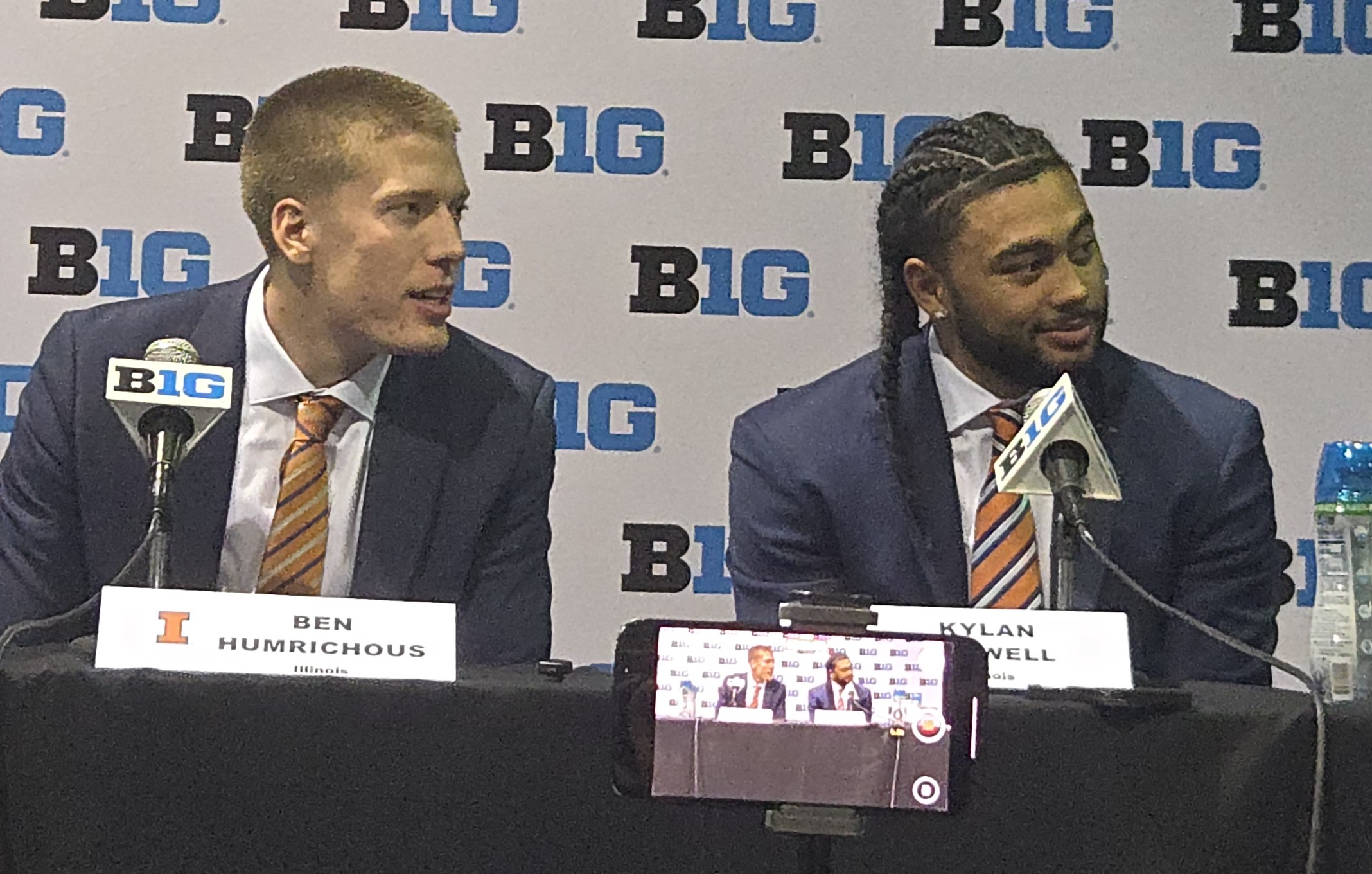
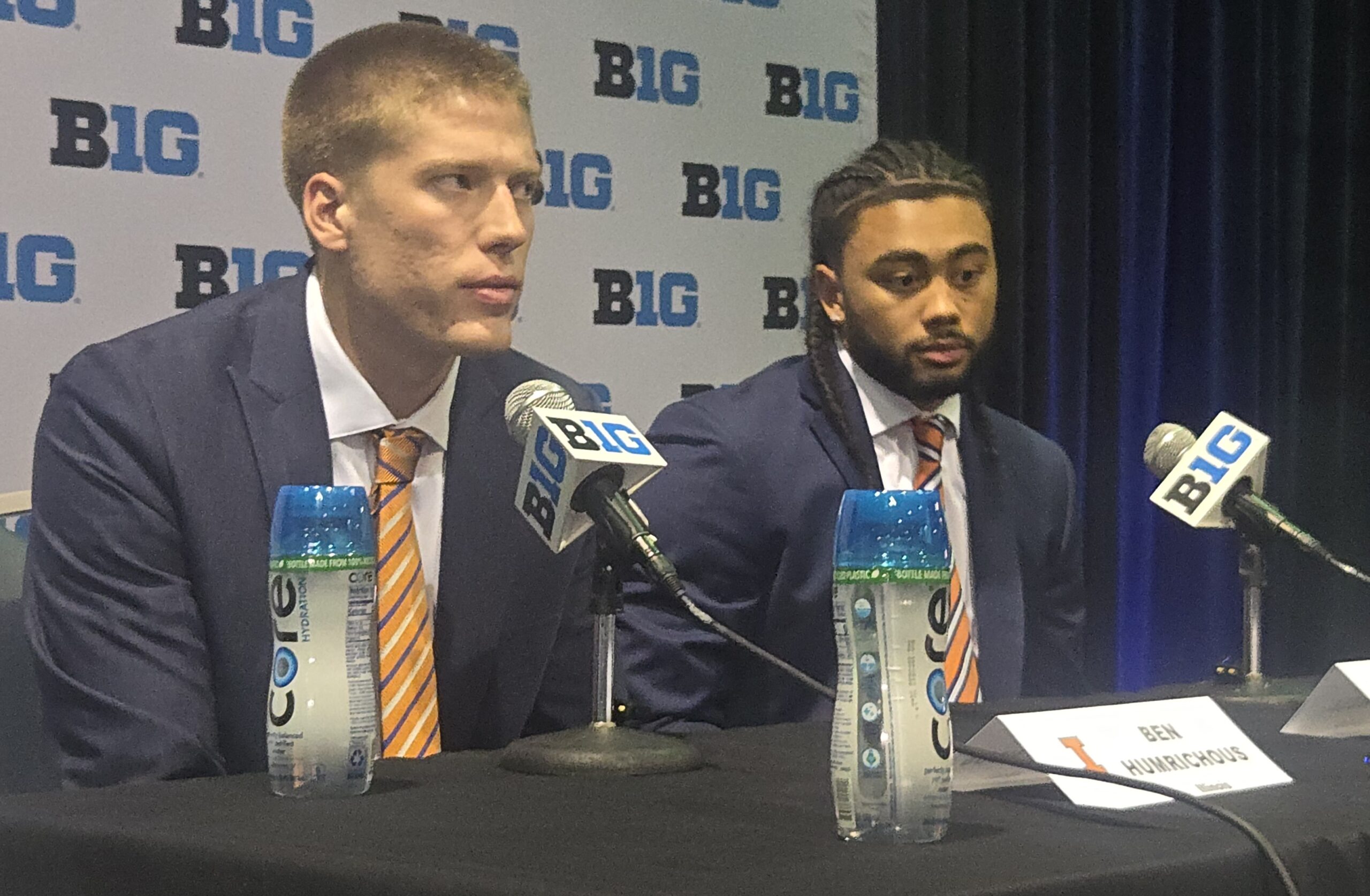
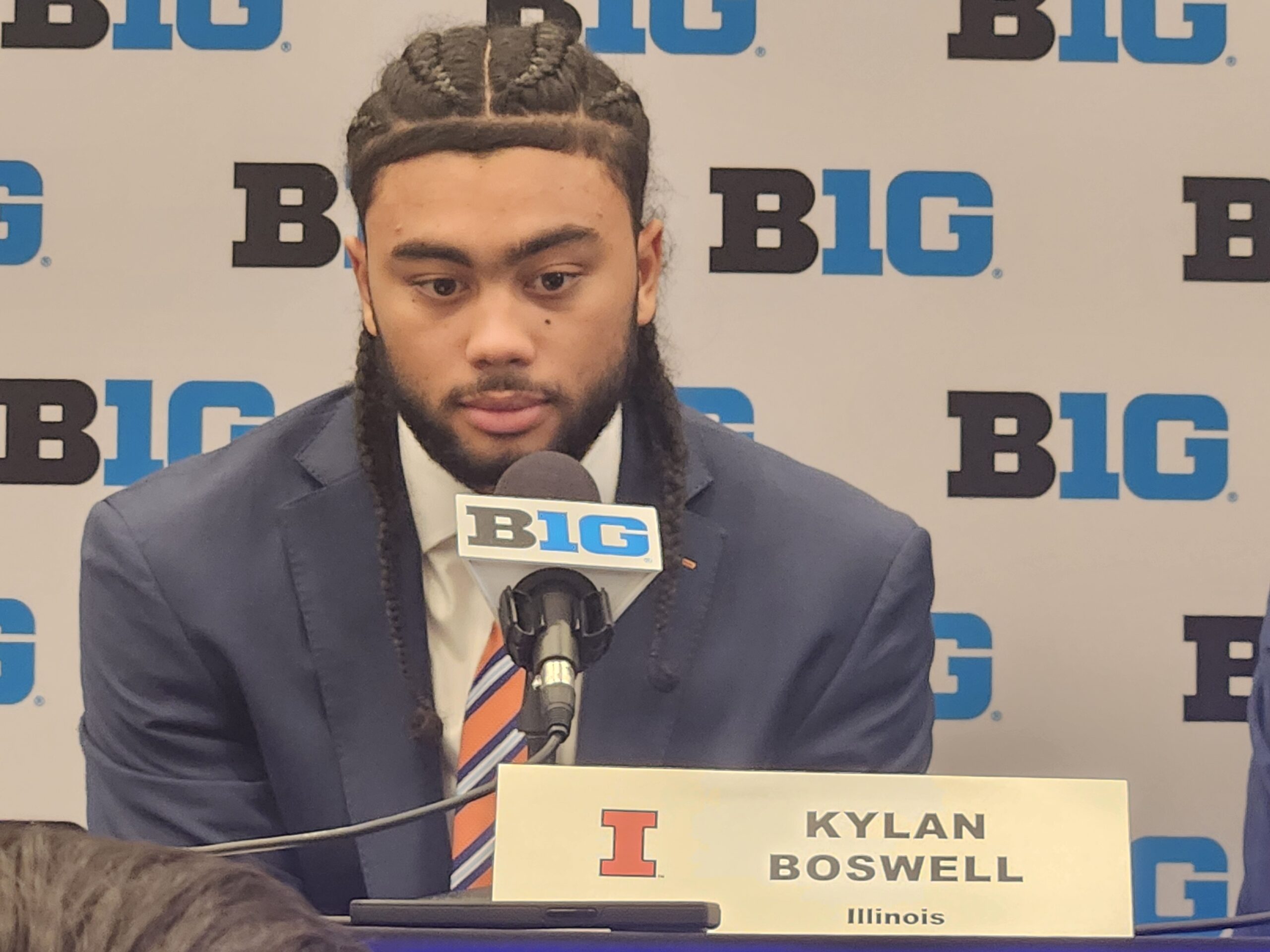
At Big Ten Media Day, I asked two Illini basketball players, Kylan Boswell and Ben Humrichous, about this very topic.
I discussed my question, as well as their answer, during my 11/24 appearance on the Locked on Illini podcast with Sunny Verna.
That’s embedded above, with this specific discussion beginning around the 4:35 mark
And/or if you want to read the transcript of the conversation I had with Boswell and Humrichous, it is present on the YouTube video here.
You can follow along with the transcript while I asked and they answered my questions, starting at the 24 minute mark.
The gist of it is this- yes, the Illini study the offensive metrics, and the metrics get very detailed and analytical.
And as you probably know, the Illini basketball offensive metrics are very good. Both last season and this season, the offense has been efficient and effective.
The numbers say- keep doing what you’re doing. After all, the Illini are running an offense that’s top ten nationally!

The next main point is this: no one will, can or should pass up a wide open three point shot. It’s your job to take it- even if you’ve missed a few already that night.
Secondly, Illini basketball coach Brad Underwood isn’t going to just tell his team:
“hey, okay, we’re going to take 20 threes tonight. And Kylan you get four, Ben you get three, Andej you get three etc. etc. etc.”
It doesn’t work that way.

Not to mention how would you even enforce these mandates?
It is simply not possible.
On an episode of Locked on Illini later that week, following the UConn loss, Verna reiterated some of these same points.
That discourse begins begins around the 2:00 mark, in the video embedded below:
Okay, so where do we go from here? What can we do about this?
Clearly, the formula didn’t work last season because that Illini basketball team didn’t contend for a Big Ten title, only earned a #6 seed in the NCAA Tournament and couldn’t get past the first weekend of March Madness, yet again.
While the current team is ranked #13 nationally (this will drop several places when the polls come out later today), they do have three losses already, and they do not look to be a national title contender.
And as Underwood has made clear, time and time again, national championships are what the Illini basketball program aspires to.
So they have to try something…….
What is that something? Do you try to get to the rim more and draw fouls? Is that your new offensive approach?
You have a pair of seven footers- do you coach them to play down low more? Do you build your offense around the concept of getting more paint touches?
Or does Illini basketball stick with the three-ball centric attack and just emphasize stronger defense?
So far, the D has been weaker than the O, so you got to firm that up.
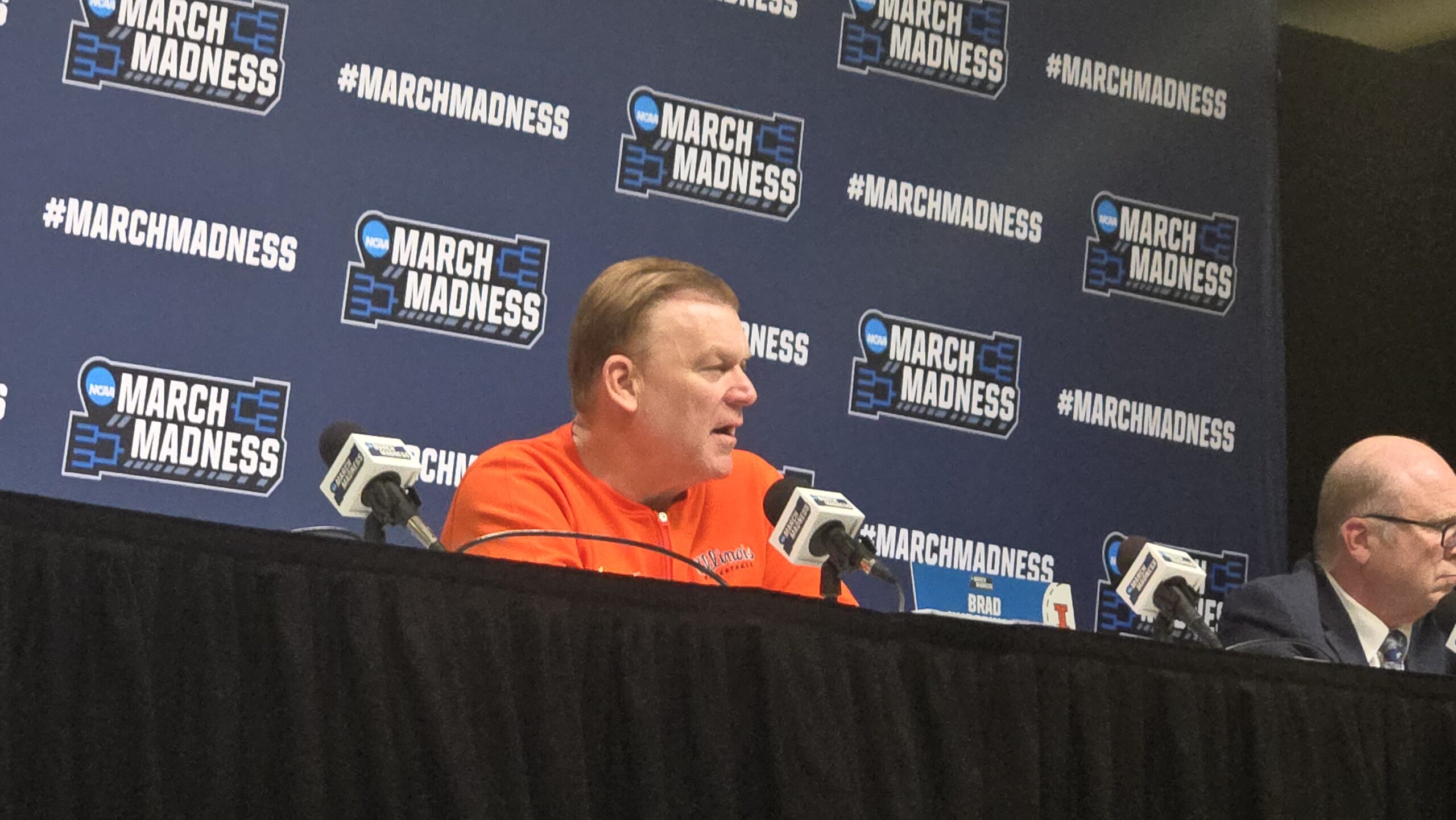
I can’t say that I have the answer- it’s not up to me. Underwood and his staff are paid, quite handsomely, to figure this out.
I just know that this approach just isn’t totally working.
Paul M. Banks is the Founding Editor of The Sports Bank. He’s also the author of “Transatlantic Passage: How the English Premier League Redefined Soccer in America,” and “No, I Can’t Get You Free Tickets: Lessons Learned From a Life in the Sports Media Industry.”
He currently contributes to USA Today’s NFL Wires Network, RG.org and Ratings.org. His past bylines include the New York Daily News, Sports Illustrated and the Chicago Tribune. His work has been featured in numerous outlets, including the Wall Street Journal, Forbes and the Washington Post.