
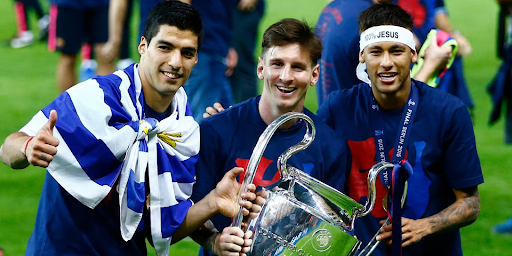
Football has long combined both competitive athleticism and a global cultural footprint. Over decades, certain players have accumulated an extraordinary number of trophies at club and international levels, earning recognition as some of the most decorated figures in the sport’s history. Evaluating such accomplishments involves considering domestic league victories, continental championships, and international honours.
Simultaneously, football has developed a complex ecosystem of analytical interest, including statistical evaluation and football betting. For enthusiasts exploring how to bet on football, examining performance data, historical outcomes, and team dynamics provides a structured approach to understanding markets. The intersection of player performance and betting data creates a multifaceted lens through which analysts observe trends and patterns.
1. Lionel Messi – Career Achievements and Legacy
Lionel Messi is widely recognised as one of the most decorated footballers in modern football history. Throughout his career, Messi has accumulated an extensive collection of major titles across club and international competitions. Matches involving Messi frequently attract attention in football player betting, as analysts review his historical influence on team performance, goal-scoring patterns, and tactical contributions. Users accessing performance data through hollywood login can explore detailed statistics and past match outcomes to inform their structured observations, without using them as predictions for future results.
Messi’s honours span multiple leagues and include significant achievements such as domestic league championships, continental club trophies, and major international victories. Notable highlights of his career include multiple league titles in Spain’s top tier, several UEFA Champions League victories, and a FIFA World Cup triumph. His career also includes achievements in domestic cups and league championships in different continents, reflecting both breadth and longevity.
Historical moments such as winning the 2022 FIFA World Cup with Argentina and adding further club or continental honours contribute to his overall recognition as a player with one of the most extensive resume of titles in football history .
2. Dani Alves – Continental and Club Success
Brazilian full‑back Dani Alves has amassed one of the most noteworthy collections of trophies in football records, with honours obtained across multiple top competitions. His success includes domestic leagues, continental club championships, and international honours achieved with his national team .
Alves achieved sustained success in various European leagues and continental competitions, becoming known for combining defensive capability with contributions to offensive play. His career spans clubs across different countries and various league formats, showing adaptability and consistency in winning outcomes.
His extensive list of honours includes multiple domestic league titles, continental cups, and international tournament honours achieved over a span of more than a decade and a half .
3. Hossam Ashour – Longevity in African Football
Egyptian midfielder Hossam Ashour is another player whose decorated career is highlighted by a remarkable trophy haul, particularly during his tenure with one of Africa’s historically successful clubs .
Ashour’s achievements include numerous domestic league titles and continental club championships. While less globally prominent than some European counterparts, Ashour’s consistent success in African club competitions reflects a high level of sustained achievement over many seasons. His career is instructive for understanding how elite performance and team success can coincide within different footballing cultures and competitive contexts.
4. Marquinhos – Emerging Continental Consistency
Marquinhos is a player whose list of honours has grown significantly in recent years. His career includes a substantial number of domestic league titles and important continental trophies, particularly through sustained periods with powerhouse club sides .
Although his career is comparatively shorter in duration than others on this list, Marquinhos stands out for accumulating recognitions across multiple seasons and competitions, reflecting the evolving opportunities for players to compete at the highest levels in both domestic and international club tournaments.
5. Sergio Busquets – Tactical Influence and Titles
Sergio Busquets, known for his role in controlling matches from a tactical midfield position, has also amassed an extensive list of honours, particularly during his long tenure with one major European club .
Busquets’ achievements highlight the contributions of midfield playmakers in sustaining championship success. His career provides a framework for understanding how style of play, tactical discipline, and team dynamics contribute to title accumulation in top‑tier competitions across seasons.
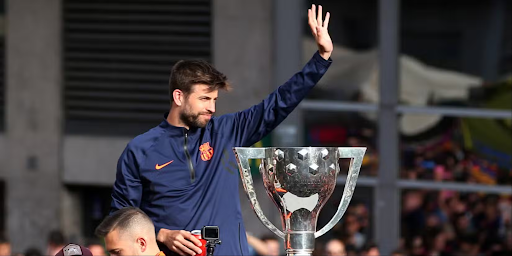
6. Gerard Piqué – Defensive Stability Across Years
Former centre‑back Gerard Piqué’s decorated career includes numerous domestic and continental honours. Playing predominantly for one of Europe’s top clubs during its most successful periods, Piqué’s career reflects how defensive roles contribute to success in championship pursuits .
His honours portfolio includes key league titles, continental cups, and club championship victories that coincide with eras of sustained team performance. Piqué’s career showcases how central defenders can play pivotal roles in teams capable of consistently competing for top honours over multiple seasons.
7. Andres Iniesta – Creativity and Collective Achievement
Andres Iniesta’s career, marked by creativity and sustained performance in the midfield, includes an extensive list of honours with club and national teams. His contributions have been part of several highly successful team campaigns, leading to domestic league and continental championship victories .
Iniesta’s achievements demonstrate how players in creative roles can influence championship outcomes indirectly through tactical control, possession play, and situational adaptability over extended competitive cycles.
8. David Alaba – Versatility and Continental Impact
David Alaba is another decorated player whose honours include multiple domestic league titles and continental competitions. His career features roles in top European leagues, demonstrating adaptability and success across multiple tactical frameworks .
Alaba’s versatility in defensive and midfield roles reflects how multi‑positional players can contribute to team achievements and accumulate honourable records across different contexts.
9. Cristiano Ronaldo – Global Career and High‑Level Success
Cristiano Ronaldo’s career spans multiple leagues and includes significant individual and team honours. While his overall trophy count may vary across different lists, Ronaldo’s achievements include domestic league crowns, UEFA Champions League titles, and notable international accomplishments .
Ronaldo’s career is also notable for record‑setting goal statistics and individual accolades, which frequently emerge in analytical comparisons of player performance. Discussions involving football betting and performance trends sometimes reference landmark moments in his career — such as Champions League fixtures or key international tournaments — to illustrate how individual performance data integrates into broader match expectation models.
10. Kenny Dalglish and Ryan Giggs – Historical Club Dominance
Players like Kenny Dalglish and Ryan Giggs accumulate significant trophy lists through extended tenures with clubs that dominated domestic leagues over long periods. Their careers are often referenced in retrospective analyses of club‑level championship consistency, highlighting how sustained performance within a stable team environment contributes to extensive honours lists .
These players’ careers reflect elite club dominance in specific eras, offering context for how team consistency and player continuity can drive repeated success across seasons.
Analytical Approaches and Structured Betting Systems
Structured approaches in football analysis often form the foundation of what some consider the best football betting system, focusing on consistency, observation, and the interpretation of historical data rather than predictions. By examining factors such as player influence, team performance over multiple seasons, and emerging match trends, analysts develop frameworks that identify recurring patterns and statistical tendencies. These systems rely on careful evaluation of information from decorated players and team histories, providing structured insights without implying deterministic outcomes.
Contextual Observations and Football Betting Trends
Although the focus here is honours and recognition, many analytical frameworks examine patterns such as team consistency, player influence, and match outcome probabilities. Historical performances, including trophy accumulation by decorated players, are often studied by individuals learning how to bet football, who analyze these trends to better understand team dynamics and performance consistency. These data points serve as inputs for trend observation rather than as direct determinants of specific outcomes.
For instance, historical matches involving decorated players can influence the interpretation of team stability or performance probabilities, especially in competitions where such players have historically excelled. In analytical domains related to football betting, researchers study longitudinal data to identify trends, but they consistently emphasise probability distributions, uncertainty, and contextual variability.
Conclusion
The updated list of the most decorated football players in history illustrates how individual careers intersect with periods of sustained team success. Players like Dani Alves, Sergio Busquets, and Gerard Piqué have extensive lists of trophies and represent consistent performance over time. Matches involving these athletes are often studied in football player betting to observe how elite-level experience and tactical awareness contribute to team stability. Analysts use these historical trends as part of structured evaluations, not as guarantees of future results.
These players’ achievements span multiple competitive environments and reflect a broad range of tactical roles, styles, and eras. Examining such careers contributes to a deeper understanding of competitive football history and offers a structured basis for contextual analytical interpretation in football performance modelling and historical evaluation.