
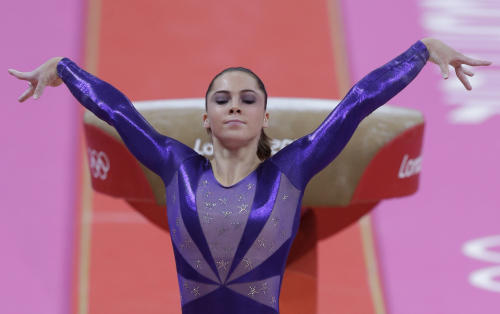
Athletic development is often associated with obvious qualities such as speed, strength, endurance, and power. Yet some of the most transferable sporting abilities are less visible. Balance, coordination, spatial awareness, mobility, and body control can all influence how effectively an athlete moves.
These qualities are among the skills developed through a gymnastics class, where athletes regularly practise movements that require precision, control, and awareness of body position. Although gymnastics has its own competitive demands, many of the fundamental movement skills involved can also be relevant to athletes participating in other sports.
Coordination Is a Transferable Skill
Gymnastics places considerable emphasis on coordinating different parts of the body during complex movements. A gymnast may need to control their arms, legs, and torso simultaneously while maintaining a particular position or preparing for a landing.
That level of coordination has applications across sport. A football player changing direction, a basketball player adjusting their position in the air, or a tennis player preparing for a shot all rely on the ability to control multiple movements at once.
The specific techniques are different, but the underlying principle is similar: effective movement depends on the ability to coordinate the body accurately and efficiently.
Balance and Spatial Awareness
Balance is another central component of gymnastics. Athletes frequently have to maintain control while moving through unfamiliar positions or transitioning between movements.
This also develops spatial awareness – the ability to understand the body’s position and movement in relation to its surroundings. In sport, this can be particularly useful when athletes are required to react quickly or operate in changing environments.
For example, a player competing in a team sport may need to adjust their body position while responding to opponents and teammates. Developing greater awareness of movement can help athletes understand how their bodies respond to these changes.
Strength and Mobility Work Together
Strength is an important part of gymnastics, but it is rarely useful in isolation. Gymnasts need enough strength to control their movements while also maintaining the mobility required to perform them effectively.
This combination is relevant to athletic development more broadly. Sports often require athletes to produce force through different ranges of movement rather than simply generating as much force as possible.
Core strength is one example. A stable and well-controlled midsection contributes to efficient movement in activities ranging from running and jumping to throwing and changing direction. Mobility, meanwhile, can help athletes access the positions their particular sport demands.
Rather than treating strength and flexibility as opposing qualities, gymnastics demonstrates how the two can be developed alongside one another.
The Value of Learning Complex Movements
Another characteristic of gymnastics is the progressive nature of skill development. More advanced movements are generally built from simpler positions and techniques, requiring athletes to learn how individual components fit together.
That process has relevance beyond gymnastics. Young athletes in almost every sport encounter skills that initially seem unfamiliar or difficult. Learning to break a movement down, practise its individual elements, receive feedback, and gradually put everything together is a useful approach to athletic development.
The process also encourages athletes to become comfortable with repetition and refinement. A movement that initially feels awkward can become more natural through consistent practice.
Practice, Patience and Progress
Physical skills are only one part of athletic development. How athletes approach practice can also influence their progress.
Gymnastics can require considerable repetition. A movement may need to be practised many times before it becomes consistent, and even experienced athletes continue refining established skills.
That experience can help young athletes understand that improvement is rarely immediate. Progress often comes through small adjustments over time rather than dramatic changes from one training session to the next.
The same principle applies whether someone is learning a swimming technique, improving a tennis serve, or developing their football skills.
A Broad Athletic Foundation
Gymnastics is not necessarily a stepping stone to another sport, nor does every gymnast need to pursue competition. Its value can simply lie in the range of movement skills it develops.
Jumping, landing, balancing, rotating, controlling body position, and moving through different ranges of motion are not exclusive to gymnastics. Variations of these movements appear throughout sport and physical activity.
For young athletes in particular, exposure to different movement patterns can contribute to a broader physical foundation. Rather than specialising too narrowly around a single skill, they can develop an understanding of how their bodies move and respond to different challenges.
Ultimately, athletic development is about more than producing better results in one particular event or competition. The ability to control movement, learn new skills, maintain balance, and adapt to physical challenges can remain valuable across an athlete’s sporting life.
Gymnastics provides one example of how these fundamental abilities can be developed together—and why the skills learned in one sporting environment can sometimes have relevance well beyond it.